Tag: United States

  • In search of belonging outside of Japan

    What are some things to consider when going abroad? In this short interview, Daiki discusses:

    · Why he left his home country of Japan;

    · Finding opportunities in your industry;

    · Biggest tips/takeaways from living abroad.


    Tell us about your background. What drove you to go abroad?

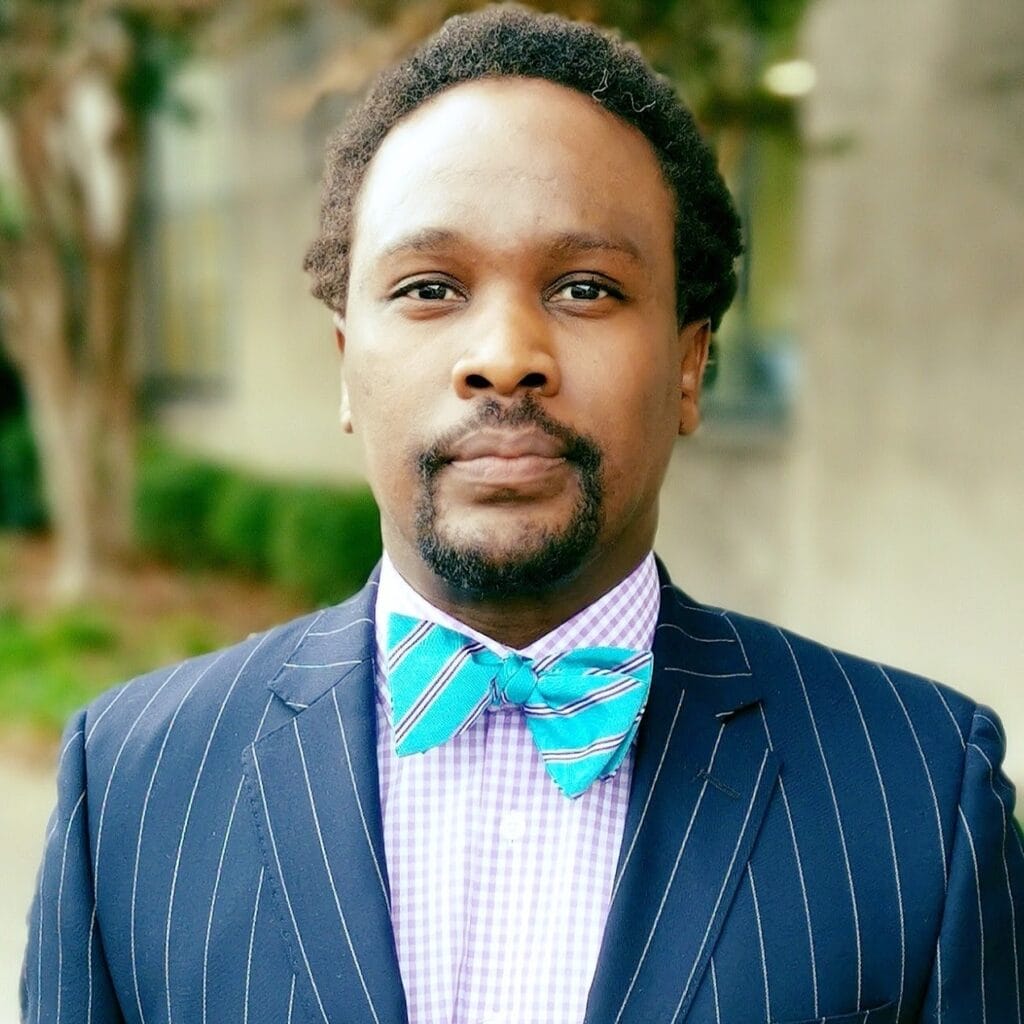
    Daiki Yoshioka, Schwarzman Scholar

    I am originally from Japan. I decided to study abroad to obtain a Bachelor’s degree in the United States, then a Master’s degree in China because I never felt like I quite fit in within Japanese society.

    What is your biggest takeaway + tip(s) from living abroad?

    I would say that taking actions is important. Simply put: I think that if you act, everything will follow.

    What would you advise to people who may be the first in their family and/or come from underrepresented backgrounds to consider when going abroad?
     

    I think it is so important to be kind to yourself. Do not compare yourself with others. Rather, try to compare yourself with the person you were yesterday. 

    How did you find opportunities within your industry?

    Networking! In fact, LinkedIn is a great channel that led to the building of high-quality relationships in a foreign country.

    If you had to move to study, work or start a business abroad, what would you do differently?

    For the United States, I would have done more research about the opportunities in the country. I also would have learned more about communities to join and be a part of.

    Do you have any final words for those interested in living, studying, or working abroad?

    I want to double down on networking. It is so underrated. It is important to invest in connecting with people and professionals.  


    About Daiki Yoshioka

    Daiki specializes in corporate sustainability and ESG strategy. Also, as an openly gay man, he is engaged in advocacy and social work for the LGBTQ+ community. He speaks English, Japanese, French, and Mandarin.

  • How I navigated the J-1 visa journey to land my first tech sales job

    What is it like to pursue a job in the U.S. as an international student? In this blog, Brice Rosette shares: 

    · His challenges and lessons learned;

    · The way he navigated job uncertainty;

    · How he leveraged his skillset;

    · Advice for those on the job market.
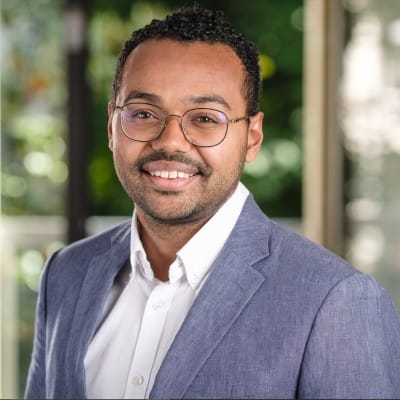
    Brice Rosette, Co-founder of My Access Abroad

    In April 2019, I landed my first full-time corporate job in tech sales in Raleigh, North Carolina, after what felt like years of persistence and navigating the complexities of being an international exchange student on a J-1 visa. Let’s rewind and talk about where it all started.

    I first arrived in the U.S. as an exchange visitor student from France in 2017, with no real understanding of what life there would be like. The only American exposure I had up until then was watching TV shows growing up. Needless to say, the first semester in Washington, D.C. was eye-opening. By the end of it, I realized that a year wasn’t enough to fully understand American culture or explore the opportunities the country had to offer. It was a bit of a bittersweet realization, and just before Christmas, I made the decision to stay. I knew I wanted more time there and felt I could contribute to the country in a meaningful way.

    With that decision, I started researching my options for staying beyond my exchange program. It wasn’t easy. I didn’t have a network to rely on, nor the financial resources to pay for services like internship placement agencies. Every online search seemed to turn up different advice, and I became overwhelmed by conflicting information. I lost months trying to figure out where to even begin. I spent countless hours applying for hundreds of irrelevant jobs that were out of reach because of visa restrictions.

    I wasn’t alone in facing the hurdles of staying in the U.S. after my exchange program. If you’re a student or a young professional on a J-1 visa, you’ve probably also heard this line before: “Thank you for applying, but we are unable to sponsor a work visa.

    I certainly did… over and over again. And maybe you have too, or maybe you’re still learning the ropes about the U.S. job market and want to maximize your chances of securing a position after graduation. Let me tell you, it was extremely difficult to land a job in the U.S. It wasn’t just because of my visa status. Even though I had the privilege of being French, I still had to navigate a system that didn’t always make room for international candidates.

    Eventually, I found an unpaid internship in Charlotte. It was not exactly what I was looking for, but at least housing was provided. Sometimes, the office manager would pay us at the end of the week to clean the office. It wasn’t my dream job by any means, but it was a step forward. It took an additional 9 months before I landed my first real tech job, and I’ll never forget that feeling of victory when it finally happened.

    It was during a trip to Puerto Rico with my girlfriend (now my life partner). My J-1 visa was about to expire in just three months, and I was running out of leads. The clock was ticking, and I was feeling the pressure. Then, I got a call for an interview from an automation tech startup in Raleigh. What I thought would be a typical, formal interview turned into something extraordinary: a 5-hour conversation with the CEO. We talked about everything from our personal stories, the company’s origins, our shared values, his vision for the future. It was a connection I hadn’t expected, and I knew by the end of it that this was a special opportunity.

    We wrapped up the interview at a Thai restaurant, and I walked away feeling more excited than I had in months. It didn’t take long for the company to offer me the job. It felt like a dream come true, and for the first time since my arrival in the U.S., I knew I had found the perfect fit for my skills and passions.

    So, as cliche as it sounds, if I did it, you can too. I managed to extend my J-1 visa three times. After my unpaid internship, I found a company that was even willing to sponsor me for an H-1B visa and green card. When COVID hit, my partner and I decided to leave the U.S., but that’s a story for another time.

    This daunting experience in the U.S. led me to become a recruiter. I wanted to see the other side of the hiring process. Now, I understand what hiring managers and recruiters are looking for and how they partner to find the ideal candidates. My goal with My Access Abroad is to help you get that same clarity and insight, especially if you’re an international candidate interested in technology, sales or consulting. I want to share everything I wish I knew when I was in your shoes from understanding visa options to finding companies that actively seek international talent, we’ve got you covered.

    So, how did I end up working in tech sales, despite having no experience?

    There are a few things I did (although I wasn’t fully aware at the time): 1. Be crystal clear about my goals; 2. target fast-growing markets with a talent gap; and 3. believe in myself.

    1. I was crystal clear about my career goals.

    I’ll never forget the moment that sparked my career in B2B sales. In October 2016, while fundraising for my school’s sports nonprofit, I struggled to secure sponsors. One day in Strasbourg, France, I noticed two people handing out organic apples as part of a Biocoop store promotion. Curiosity led me to visit the store, meet the owner, and ask about his marketing campaign’s success. That spontaneous conversation led to a €1,000 sponsorship in exchange for a targeted street marketing campaign with my peers. This moment ignited my passion for sales. I pursued this passion through my major in Sales Management and Negotiation for my Master’s, my role as the Sales Director of our student-run agency, and my study abroad exchange in the U.S., which I chose because I thought it was the best place to learn about sales. Looking back, knowing exactly what I wanted—and having a compelling story to back it up—was key to landing a job in the U.S.

    1. I targeted a fast-growing market.

    In 2017, when I was job hunting, the business process automation industry was transforming into Robotic Process Automation (RPA). At that time, senior sales people typically only had 2-3 years of experience, and many medium-sized companies were struggling to find qualified candidates for their sales teams. That explains why/how I got lucky: a medium-sized business was looking for its first sales hire and couldn’t find the right person. They were ready to hire someone who was the right fit with their company culture, mission, and offered a fresh perspective. I was exactly what they needed.

    I broke into a new industry and took a leap that turned out to be life-changing. Truthfully, however, I would’ve saved myself months of searching if I had spent more time understanding the emerging market trends and industries that were growing, rather than focusing only on companies with established brands.

    This brings me to a point that’s important for anyone job-hunting today, especially internationally: understand the future of work. According to Gartner, the future of work describes the changes in how work will be done over the next decade, shaped by technological, generational, and social shifts. By understanding where the world of work is heading, you can identify and build the skills that employers will value now and in the future.

    Research has found that nearly 40% of U.S. jobs are in occupations that are likely to shrink. Some roles, like bookkeepers or accountants, may disappear entirely or be replaced by newer, emerging job categories, with AI it may even be more.

    1. I believed in myself, even when the odds were stacked against me.

    One day, I met a former international candidate who had secured a job at Deloitte. She told me that sales roles weren’t an option because only certain job categories were available for visa sponsorship. According to her, only experienced sales professionals in a niche industry, fluent in a foreign language, were ‘worth’ the investment for a company. In hindsight, I understand her perspective. At the time, her perspective didn’t stop me from trying anyways. If you ask anyone in my network, I was borderline obsessed (and a little foolish) with this goal. I believed in my ability to defy the odds.

    Reflecting back on this journey, landing my first tech job was not easy. There were many moments when I felt lost and uncertain. But, I learned so much along the way: the importance of persistence, building connections, and staying true to my values. Most importantly, I learned that with a growth mindset, it’s possible to build a career and life in the U.S. even if it starts with an exchange visa.

    If you’re in a similar situation, just know that your journey won’t necessarily be linear, but with patience, resilience, and a bit of luck, your hard work will eventually pay off. If you’re considering staying in the U.S. after an exchange program, don’t be afraid to take the leap and explore your options. The destination may be complicated, but the process itself can be incredibly rewarding. The right opportunity is out there waiting for you… It’s up to you to find it.


    About Brice Rosette

    Brice’s approach to global mobility is rooted in his own migration journey from Martinique to studying abroad at Howard University, launching a business in rural Mexico during the pandemic, to his language learning immersion in Beijing. Graduate with a Masters from EM Strasbourg in negotiation, he developed deep expertise in cross-border recruitment, sales, and technology across North America, Europe, and Africa, including building up technology teams for a top-tier MBB.
  • A Former Undocumented Immigrant’s Vision of ‘Abroad’

    Have you ever wondered how you can dream beyond your immigration status? In this interview, Oscar Romero shares: 

    · His immigration story and lessons learned;

    · The way DACA changed his life;

    · How he navigated multicultural environments;

    · The inspiration for his platform MyUndoculife;

    · His vision for cultivating virtual connections.

    Can you tell us about your immigration story?

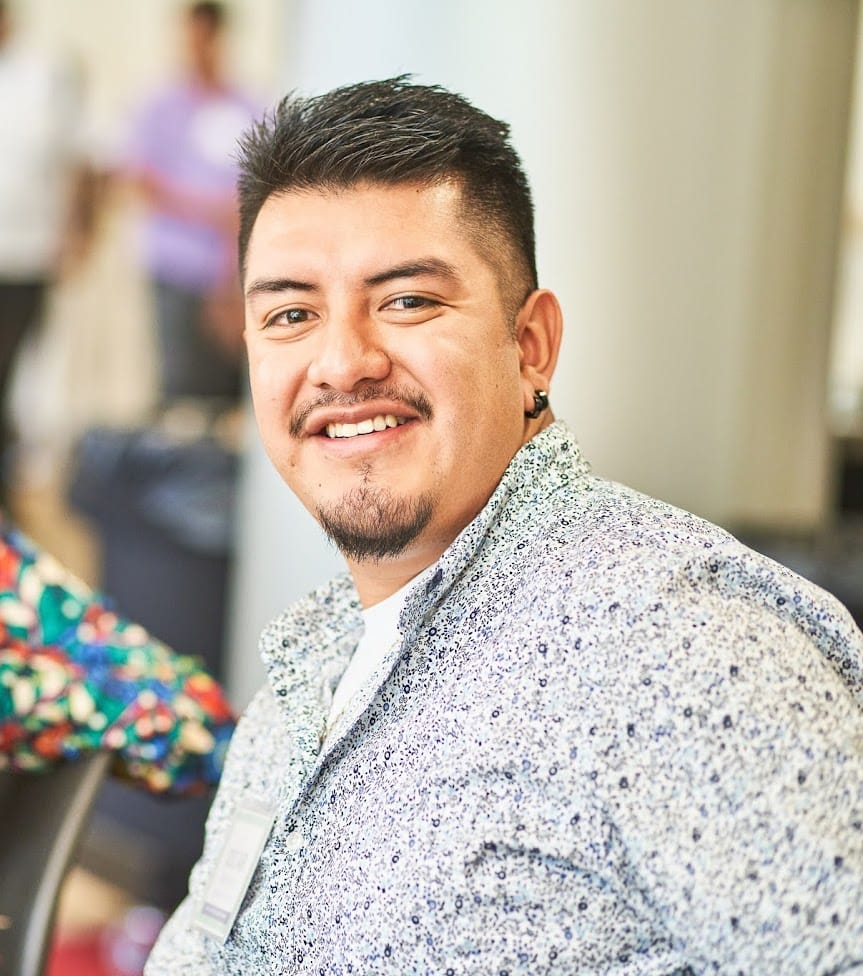
    Oscar Romero, Senior Software Engineer and Social Impact Activist

    I was born in Mexico City. I grew up there until the age of three. My dad had a job as a part-time electrician, while trying to finish up his high school degree. He struggled to make ends meet with tuition, transportation and general living costs, having a child and a wife. We lived with my grandma. My dad heard from a family friend about an opportunity for farm work in the States. He did that for about three years. He was away for about eight months every year. Then, he thought it made more sense to settle in the States with his family.

    I think about it now that I’m about his age when he was making this decision. Leaving your family and friends. They made the decision to go to the U.S. because eight months apart from his newly started family was not worth working in the States just to make ends meet in Mexico. In 1999, my mom and I arrived in the States. We first arrived outside of Chicago and stayed with an aunt who was already established there, while he finished his last work contract in North Carolina. We ended up moving down to North Carolina where I was raised since the age of four. In middle school, I started hearing from the community that undocumented people couldn’t make it past high school, but I didn’t know that the main reason was the cost and lack of funding available for undocumented immigrants. 

    In 2012, the Obama administration passed an executive order, Deferred Action for Childhood Arrivals (DACA) to allow people who arrived under the age of 16, pass a criminal background check, and fulfill a few other requirements to have work authorization and a social security number, which is a requirement to get a driver’s license in several states. It’s about a $500 application fee and needs to be renewed every two years. USCIS collects your biometrics amongst several other forms of information and documentation. It’s a very rigorous process to get approved, which is one of the biggest things people fail to realize. It’s gone through some challenges during the Trump administration which tried to rescind it. Most recently, several southern states have joined together to challenge it in court. Additionally, there are also legal fees if you decide to apply and renew with a lawyer. It’s been a journey, and as of January 2023 I was still under DACA and without lawful status. I graduated from UNC-Charlotte in 2017 and I am working as a Senior Software Engineer now. My goal was to have a career that would allow me to be remote, so that I could have the flexibility of being abroad and access to a job in case it came down to having to leave the country or being deported.


    What was it like growing up in the United States? Did you overcome any obstacles, such as cultural differences, professional etiquette, or language barriers?

    In kindergarten, I had to take English as a Second Language (ESL) classes. I remember late nights with my dad trying to figure out how to do my homework. I couldn’t communicate much in English for the first couple of years. I vividly remember an assignment where I was told to draw my house. I told my teacher that I couldn’t draw my house because I didn’t have a house. My teacher was confused, ‘Why can’t you draw your house? Where do you live?’ ‘I don’t have a house,’ I kept saying. They brought the ESL teacher and he translated, ‘porque no puedes dibujar tu casa?’ It was because I did not live in a ‘casa.’ We were in a traila, a single-wide trailer. It wasn’t a house, a casa. To me, a casa was made of brick and mortar and had two stories. That’s what I would see driving down the road. We lived in a trailer. I had no idea that it was essentially my house. 

    I went with my parents everywhere as a child, so everything around me was experienced through a Mexican lens. It was difficult when I went to school. People talked about the popular music of the moment. I grew up listening to Vicente Fernandez and other music they did not recognize. It was hard to bond with most of my peers. Meeting more Latinos in middle school helped me find my identity more. I ended up being asked by my non-bilingual teachers to be the translator for new Spanish speaking students. I liked seeing a little bit of my culture that I didn’t normally have in school. Then, I was placed in advanced classes with mostly white kids. Bearing and bridging that culture gap was difficult, but I learned how to be easy going and adaptable from my parents. They adapted to a completely different lifestyle. That set me up for success in high school.


    You touched on this earlier. How did DACA impact your life specifically?

    When I was 14, I remember the school announcements at the end of the day informing you to stay after school for Driver’s Education courses. I was ready to get my driver’s permit to help my family. North Carolina stopped giving undocumented individuals driving licenses with the REAL ID Act of 2005. My dad still had one from when they still gave them out, but my mom did not. She couldn’t drive without the fear of getting pulled over. It was stressful to be hyper aware of driving within the speed limit, having your license plate up-to-date, and not bringing any attention to yourself or acting suspicious. Seeing cops, blue siren lights, and getting pulled over was a nightmare. Because of this, I saw police officers as the people who would get my parents sent back to Mexico. How would you survive that? I heard stories of resilient immigrant kids who stayed when their parents were deported. That was a constant fear of mine. I am the oldest. I have two younger siblings. I was not gonna be able to take care of them.

    In 2012, the DREAM Act failed to pass in Congress. It was supposed to grant a pathway to citizenship for millions. On June 15, 2012, Obama gave a speech announcing DACA. It hit me. I would finally be able to get a social security number. This small action was going to open so many opportunities. I remembered back to when I went to Driver’s Ed and they sent me home with a piece of paper asking for my social security number. I didn’t have one, so I was unable to get a driver’s permit. Once my DACA was approved and with a social security card in hand, I immediately went to the DMV. I no longer had to worry about driving without a license and all the consequences of it. I could drive my mom around to where she needed to go and take my siblings to school. 

    Having a social security number also allowed me to work. Before that, I was doing odd jobs and getting a few bucks here and there. I ran my own business in high school, but earned very little. Now, I was excited to apply for a real job. In college, I applied to be a Resident Advisor to reduce costs and have some income. I had a full scholarship, but with this new job and stipend, I had extra money to hang out with my friends and buy stuff I needed without stressing my parents. I was also able to open a bank account and get my stipend directly deposited. A lot of things in life became easier with DACA, not just for me, but also for my family. I love the empowerment of making my own money since my parents were living paycheck to paycheck. 


    Could you see yourself living in another country other than the U.S.?

    Yes, 100%. I’ve contemplated it a lot. The Trump administration trying to rescind DACA has been unfortunate and unfair. I explored different options for once I finished my degree. I knew I liked tech, but that was as far as I knew. I started in IT support. Talking with friends who also have DACA, I created a Plan B, C, and D. I looked into Canada, Mexico, and Japan. Canada was at the top because they have a quicker process to get permanent residency and it is skills-based. Mexico gets portrayed through a lens of crime. This and my family’s experience of poverty skewed my views. However, meeting Roberto, a friend who lives in Mexico, gave me a new perspective on what it’s like with a decent job. 

    I explored all avenues where I could go as a Mexican citizen. The question I get asked is, ‘why don’t you just do it?’ My family and friends are here. The moment I leave, I don’t have an immediate way back. Being okay with that has been the toughest mental block to overcome. As the oldest and having a career, my parents can lean on me more. They don’t have to worry so much. I lived with them for a month in January because of the pandemic. My job was fully remote. Being at home, I saw what they needed. I told my mom we could replace different things in the house instead of having to adapt to the challenges of having things that were deteriorating in the house. I no longer wanted them to struggle with the small things in life anymore.

    I’m definitely looking at other places. One day, I want to live elsewhere. There are so many places I want to visit too. France because I’ve always appreciated French culture. Spain because of the language aspect. I want to go abroad someday. It’s not about being a U.S. citizen, a Mexican citizen, or French citizen. We’re all human. 


    What challenges did you face in your pursuit of post-secondary education and beyond as a non-U.S. citizen?

    The biggest challenge was financial. I had no access to federal or state public funds. A lot of states did not grant undocumented immigrants in-state tuition when I was applying – since then some have started to enact progressive policies to help undocumented folks. Even though I’ve been in North Carolina since I was four years old, the rule of getting in-state tuition after two years was not applicable. I had to pay out-of-state tuition, which is much higher. Then, there is the room and board, travel, and additional living expenses. My undergraduate degree at UNC-Charlotte ended up costing about $130,000. That is a public school, it is even higher for a private school. 

    That was one of the biggest challenges, where do you come up with that kind of money? My parents could not afford that. I even considered Mexico since it would have ended up being more affordable to study there. Another challenge was living on my own for the first time. The longest I had been away was in the summer of 2012 for a program called Governor’s School. Two individuals from every county in North Carolina are selected for a five-week program. 

    It was very hard not seeing my parents or experiencing Latino culture, things like quinceañeras, weddings, and dancing, were all things that I missed out on every weekend during college. On campus, they hosted block parties with music, but I felt lost. People around me jumped up and down. This was not how I was used to dancing. How was I supposed to socialize?

    Those barriers have diminished overtime. Now, I see them less as barriers, but rather as opportunities to challenge myself and also bring people in to share my culture. Thankfully the Golden Door Scholarship helped me. There are more scholarships available now. There’s the Dream.US and other smaller ones. Some schools, even public ones, are trying to allocate private scholarships for undocumented students. Before 2012, people without DACA faced even greater challenges.


    Where did the inspiration to create My Undoculife come from, and why do you think it’s important to do this work?

    I made small steps. First, the website creation in college. Then, unlocking my potential to amplify my voice. In 2018, I began the transition into software engineering programming. I’m not a website designer by nature, but I can put something together. I targeted making a personal portfolio to make my work visible. Afterwards, I thought, I’ve been successful, which is great. However, it’s important to showcase the successes of others too. There are many platforms that do that, but not for people like me. It might be due to lack of a platform. It could also be that the media portrays our stories in a specific way. 

    These things came together and I wanted to share people’s successes without an agenda. I began doing interviews. I realized I needed to be more targeted. I thought about a platform for undocumented folks; My Undoculife was born. The idea was that people who are undocumented need a platform to share their story. We aren’t heard as much as other individuals. I saw people needed to see someone share their story first in order for them to be comfortable sharing theirs. I started with mine. I wasn’t eager to be a writer, but I wanted to get this rolling. I started getting views and asked people if they would be okay sharing snippets of their stories. I met a fellow Latina through a mentoring organization called Circle de Luz that she volunteered with. She thought the website was awesome and wrote a post about the challenges of fitting in. It was a hit and I continued to develop the site.

    This platform specifically targets anyone who identifies as undocumented now or at any point. The general concept of being undocumented doesn’t get a lot of spotlight. It was taboo before DACA since everyone lived ‘in the shadows.’ Who’s to say you would not get deported after coming out? But, it’s significant to share our stories, so we do not feel alone. When you’re trying to fit in, thinking that you’re the only one is alienating, right? If you are in a room and think you are the only one who feels a specific way, you may resort to staying in a corner, hindering yourself. I want to end that and give everyone a place where they can identify with others.


    Do you leverage your multicultural and multilingual background as a competitive edge in your applications? 

    In general, I always put Spanish as an additional language in my applications. I have a concrete example though. By definition, I was an international student at UNC-Charlotte. I used that to my benefit when interviewing to become a Resident Advisor for the international and Honors students. I reiterated that I had been an Honors Program student myself and had connections with the program. I could be a liaison. Then, I defaulted to the fact that they categorized me as ‘international.’ I brought up how I was able to connect with Spanish-speaking students in the dorm. Being multilingual and multicultural gave me an edge compared to other candidates. In this case, leveraging my culture and language helped me. 

    However, had I been applying to another residence hall it may not have given me as much of a leg up, and this goes for any role, you want to tailor your resume. After this, I worked in Sales at Red Ventures part-time because they had a big need for Spanish-speakers. In my resume and cover letter, I emphasized that I could easily transition from English to Spanish. I also wrote that I did not even require language training, I just had to be taught the technical vocabulary. 


    If you can link language and culture, do it, especially as companies continue to push for Diversity, Equity, and Inclusion (DEI). Open yourself and share your culture. Think about how you can use it to push a company’s mission forward. Start by sharing your story, connecting with others, and identifying any gaps in the company. How can these gaps be filled? If I am up next to a candidate with the exact qualifications and years of experience, I can differentiate myself by sharing that I can do public speaking in English and Spanish. I also have cultural awareness in business, which is helpful if the company wants to go international. A lot of companies like candidates with study abroad experiences. However, as an immigrant coming to the States and adapting/living with several cultures, that is an abroad experience without going abroad. As we become more virtual, there will be more programs to learn how to speak different languages, connect with people from that country, and learn about their culture without leaving the comfort of your home.


    Any final thoughts or words of advice?

    The pandemic’s virtual nature unlocked new connections and friendships. I met people online whom I have yet to meet in person, but feel very connected with. It takes intention to meet every now and then, but even small messages work. That’s the way to become better. I want us to relate on a human level. To have nationalities be secondary, so we can celebrate each other first. In this virtual world, it is possible to embrace the concept that everyone has access to be abroad, even if they stay in their country. Go on Reddit. Look for groups that are in a country you are interested in, then for anything that interests you about the culture. The internet is a place that allows you to go down rabbit holes and explore other countries. We can become international citizens. We are all part of this world and need to appreciate one another more. 


    About Oscar Romero 

    He is a passionate software engineer dedicated to leveraging technology for positive change. He wears many hats, but the main ones he has are as a first-generation immigrant, first-generation college graduate, and activist for equity and inclusion. Much like in software, where constant iteration and improvement drive progress, he believes that our society has the power to continuously evolve and strive for equity, justice, and inclusion. 

  • Entrepreneurship Abroad: A French-Guyanese’ Success Story 

    Have you ever dreamed of becoming your own boss and traveling the world? Look no further. In this interview, Alizé Utteryn demystifies entrepreneurship and shares:

    · Her immigration journey leading to New York;

    · Her own definition of the modern American Dream;

    · The untold truth about the French ”raceless society”;

    · Her recipe for success abroad.


    Can you tell us more about your background?

    I was born in Cayenne, French Guiana. I grew up in Paris. My educational background is in Human Resources with a specialty in Management. After my studies, I worked for big companies in France and received an opportunity to work for an American company in the Czech Republic. I seized this opportunity and stayed for two years because going abroad was a chance for visibility and international experience. I was in charge of payroll. I was the only Black person there. It was a cultural shock. 

    Alize Utteryn, CEO and Founder of Alizelavie Corp

    I had never been to Czech Republic. When I arrived, they questioned me because they couldn’t understand my background. Sometimes, they stared at me because they had never seen a Black person before. It took me some time to get adjusted because my English wasn’t great at the time and Czech was hard to understand. I had no idea where this would take me, but it was a nice experience to grow, become more mature and work with people from a different culture.

    After my successful expatriation, I wanted more. I asked my boss if I could be transferred to the United States. Fortunately, it worked out. When I landed in America, I felt like I had never learned English. It was difficult for people to understand me and vice-versa. I watched TV and read daily to improve my English. Eventually, I decided to go back to school. I studied at Brooklyn College for two years and took intensive English classes. It was hard without friends and family, but I was very dedicated on what I wanted to achieve. It was a lot of stress though. I ended up crying sometimes because I was so tired on the weekends and didn’t want to go to school. When you come to a city like New York people say you are lucky. However, once you live here, it is completely different. There are so many challenges. You don’t even share what you are facing with your family to avoid worrying them.

    After two years, I went to a model casting to meet people. I was probably the oldest one, but I lied. I said I was 25. Surprisingly, I made it. I introduced myself to the owner of the entertainment company. When he heard my French accent, he asked if I wanted to work with him. He didn’t know anything about me, but he wanted to give me the opportunity. This was my first step into the fashion/entertainment industry. Gradually, I became more immersed. Coming from a Human Resources background into an Executive Assistant role, I learned on the ground: the best school of life.


    You started off very focused in HR, and now you’re in media and journalism. Where did you find the courage to take the leap to become an entrepreneur? And what advice do you have for others?

    I didn’t choose to become an entrepreneur. Circumstances made me do it. When I started working, people took advantage of my knowledge and didn’t give me credit. One day a Chief Editor told me, 

    “You will never be able to do business with your accent.”

    I decided I had enough and quit my job. This brought out the best in me. When people underestimate you, prove them wrong. I didn’t think about how I was going to pay my bills. I was just fed up with being exploited. I realized I could do something on my own. I founded my company, AlizéLaVie and my magazine, a global platform where people can share their inspirational stories and challenges. Some people don’t know what it takes to be an entrepreneur. Sometimes you get money and other times, you don’t. You start doubting whether you made the right choice. Regardless, you must stay motivated and keep pushing. 

    If you want to become an entrepreneur, be ready to take some risks and fail. Failure is a part of the process to become successful. You will learn and get better. If you are not a risk-taker or not willing to go out of your comfort zone, don’t do it. If you decide to make the jump, you need a strong support system because being an entrepreneur is a long journey. You must be ready to win and lose. That’s part of the game.


    As a Black immigrant entrepreneur, did you face any specific challenges? And if so, how did you cope with those?

    In New York, I live in Harlem where there are mainly African Americans. I always felt like I was home. I always embraced both cultures; French Caribbean and American soon. So, I didn’t face challenges. On the contrary, being a Black French womanopened a lot of doors. My accent makes a big difference in how people perceive me. That’s really helped me build my confidence. I never let my skin color be an obstacle. I am proud of being Black and embracing my blackness, which is an asset for me.


    What inspired you, and gave you that momentum to go to the United States? Can you elaborate more on that decision?

    When I was little, I would watch movies and be in awe of the U.S. “One day I will go there,” I said. I came to America with my sister when I was 15-years-old. We went to Chicago first, then Milwaukee, and finally New York, which I immediately fell in love with. I dreamt of returning to live and work here. Things didn’t work out the way I thought. I started in the Czech Republic, then ended up in America. Without going to the Czech Republic first, I probably wouldn’t be here right now. After 14 years of expatriation, New York is home for me. When I travel a lot, I always have this feeling of missing home. I still visit family and friends in France and French Guiana, but in the end, I always want to return to my sweet home: New York.


    We saw an interview on YouTube where you talked about the ‘’American Dream.’’ Now you’ve been in the US for a while. Do you still believe in the ‘’American Dream,’’ and, if so, for whom?

    I think President Trump tried to make us believe that America was not what it used to be, especially with the hatred increasing every day. I was here when Obama won and it was a milestone to see a Black man become the President of the United States. Since then, I have been motivated to make it. Obama was a living example that everything is possible in this country. Chase your dreams and work hard because nothing comes easily, especially in America. It’s all about your mindset. The American Dream is not gone for the ones willing to make sacrifices, take risks, be bold and work hard. America will always be the land of opportunities. In France, it’s different. If you don’t come from a special background, elite school, and on top of that, being Black…  I can tell you; it is more difficult to succeed. In America, you can be a Pastor, then become a politician. You can be anyone you want. This is how I qualify the American Dream.


    In 2014, you were a Ted-X speaker about success and taking your destiny into your own hands. In the years since 2014, is there anything else you’ve learned that you would add?

    I took risks and left everything behind to start from scratch in America. Today, if I had to do it again, I would but not without a mentor. It’s important to have someone push you towards your goals. Now, I mentor others so they avoid making the same mistakes. I would also add long-term projections. When I started my business, AlizéLaVie, I didn’t have a business plan. I was doing it out of passion. Now, I see things differently. Make sure your passion brings you revenue. You have to pay bills. At some point, you must know where you are putting your time and realize time is money. If I had thought more like a businesswoman rather than an artist, I probably would be much further today. But, you need to learn at your own pace. Sometimes we only understand the hard way. I think there’s no time wasted. It’s a learning process.


    There are differences in perception of race in French and American society. Living in the U.S., your work is very focused on race and diversity. Is your work in some way inspired by your experiences living in France – a raceless society?

    I don’t like France’s hypocrisy. They are the first to criticize America. I worked in France within large recruiting agencies. When clients called, they didn’t know I was Black because I don’t have an accent. 

    They would say, “Don’t send us any Bamboula (negro) please.” 

    I couldn’t identify with that. I also worked with organizations, companies, and schools where I would hear stuff like that. You must respect corporate culture, otherwise you’re at risk of losing your job. 

    France likes to say they are a country that welcomes everyone. This is not completely true. In America, at least it’s clear; they ask about your race on your application. In France, it’s forbidden since it’s considered discriminatory. Do you prefer a system that pretends to be equal but is secretly more racist? I love France, but I am just being honest. I’m sharing what they don’t show us behind the scenes.

    It is crucial for Black people to be educated. Our next generation has the power to create an impact. Education is the passport to the future. My mission is to educate people on how our differences can be valuable and how we can empower one another. Immigrants in America face challenges. Some may deal with racism, language barrier, and culture shock. It’s very difficult.

    I focus on serving and giving back to the community to transform the narrative. With the COVID-19 outbreak, I’ve realized how blessed I am. While watching TV, I was touched to see those who are most affected are Black or Latino. They usually don’t have access to proper healthcare. I’m lucky because I have the choice to stay here or go back to France. 

    Today I have the luxury of traveling the world and making a living from my passion. I want to be an inspiration for young people willing to become an entrepreneur. If you come from a poor background, you can still make it. I want to elevate my people and give them a second chance. I brought 52 students from the French Caribbean and offered them an internship and/or an immersion program through my professional network. Minorities need this kind of help. The earlier the better. Young girls need to be educated to avoid them dropping out of school and/or getting pregnant. Expressing your voice is important, especially if you have a platform and fame. That’s what I do while connecting the diaspora and empowering others.  

    Walking down the street, I feel very bad when I see Black people in desperate situations. I want them to realize they can make other choices to change their destiny. Decide what you want to do, find your purpose, and be surrounded by the right people. Everything takes time, you will fail, but it’s ok. Remain faithful and don’t give up until you achieve your goals. 


    We were intrigued about your work with BelleLaVie Corp. What do you hope this work will accomplish for the African diaspora within the next few years?

    What we are doing is very important because we want to disrupt the normal system. The problem in the diaspora is a lot of people are in debt because they don’t learn financial literacy at school. I think it’s kind of purposeful. The less you know, the more they can control you. Look at Africa, how many African countries still depend on Western countries? 

    Despite being the richest continent on earth, Africa is still the poorest and continues to be exploited.  Its resources make other countries rich. Additionally, Africa has the youngest population. Soon they will become the biggest population in the world. Africa has immense business opportunities this new generation can develop and benefit from. An increasing number of Black people have the knowledge and education required to change the narrative. If they don’t learn that at school, we have to mentor them and educate them about financial literacy and business. 

    We must break this poverty cycle and build wealth within our community. We also connect investors with entrepreneurs to fund their projects. I am confident this work will have positive effects. The many creative minds in our community just need guidance to be successful. Thankfully, we are moving in the right direction. More Black people are investing in Africa. Africans study in America or in Europe, then return to the motherland. There is a wake up call to develop our economy and embrace our greatness. 


    Any final thoughts or advice that you have for anyone thinking about studying, working, or living abroad or anyone who might read this blog post and be inspired by your story?

    Have a plan. Be ready to go abroad. It is critical because it has become even more difficult to come to America with so many restrictions. Make sure you have enough money to execute your plan because you don’t want to end up having odd jobs to survive. Trying to make it in a new country without financial resources is not an option. This is when you can become depressed, may find the wrong people and fall into bad paths. Ask questions to those already there. You have nothing to lose. While talking to them, you might be more inspired and get new ideas. Follow your dreams. Surround yourself with the right people who have positive mindsets. Don’t be afraid of competition. Never stop educating yourself if you want to reach greatness. Be a leader, not a follower!

    About Alizé Utteryn

    She is an award-winning multitalented media entrepreneur, businesswoman, and community leader. Born in Cayenne (French Guiana) and raised in Paris, Alizé is a graduate of Paris’ Institute Superior of Human Resources (ISGP) with a Master of Sciences degree in Human Resources Management. Since she came to the United States in 2009, leaving everything behind to take up new challenges and live her American dream, she has quickly built a name for herself. Today she is a recognized journalist, accredited at the United Nations, member of the Society of Professional Journalist& Media and National Association of Black Journalists. She is also a member of the US National Committee for UN Women, advocating for gender equality and the empowerment of women. She is the brain behind AlizéLaVie Media and the founder of AlizéLaVie Magazine, an international multicultural bilingual magazine promoting diversity and cultures around the world. She runs AlizéLaVie Agency a creative marketing and branding agency. In May 2018, she was appointed as the Vice President for Media& Public Affairs for United African Congress (UAC) the premier Pan African Umbrella Organization. She received the President’s volunteer service Award 2020, a coveted medal from the President of the United States.

  • Freed from Apartheid: A South African Zulu’s World Travels 

    Do you discover countries for yourself or do you base your opinion based on what others say? In this interview, Dr. Mnyandu discusses the importance of making your own opinion about a place and 

    · Growing up during apartheid in South Africa;

    · Returning to his home country as a professional researcher;

    · The importance of demystifying Zulu culture and traditions;

    · The hidden history and development of Chinese-African relations;

    · Studying abroad during your time in college. 


    Tell us about your experiences growing up as a Zulu South African during three critically distinct phases: apartheid, its downfall, and post-apartheid. How did you understand your identity during those tumultuous times?

    Dr. Phiwokuhle Mnyandu

    I grew up in a middle-class neighborhood. We always competed to do well in school. If you were seen leaving school early or in the middle of the day, people would stop you. However, this neighborhood wasn’t a township. When apartheid began in the mid-1900s, townships were designated places for Blacks to live in. They were usually crowded and lacked basic amenities. “Colored” — which might be a problematic word in the Western Hemisphere — is fine in South Africa. “Colored” refers to mixed individuals who lived in better conditions than Africans and Indians, but not better than whites.

    As a child, I did not know this. My parents protected me, so I lived in a blissful state of ignorance until I was 12. I met a white person for the first time and realized I was Black when I went into the city with my mom. I began asking questions: “Why are we on this bus? It’s old and it’s always late. Why don’t we take the blue one? It’s nice and is always on time.” 

    After the downfall of apartheid, integration began. My mom wanted the best for me and sent me to a former designated white school. I was one of the first 30 to integrate an all-boys school of 700. It was the second year of integration. It wasn’t nice. I was hazed.

    In the mid-1990s and early 2000s, you really see a difference in the country. You can live wherever you want if you can afford it. Realization dawned that South Africa had many resources that it could offer me as a citizen. You start having this sense that there is racism.


    In an interview with E. Ethelbert Miller, you mentioned the normalization of violence and how you embraced it as a part of your everyday existence. Can you talk about the dangers of becoming numb to this type of violence?

    Living in an oppressive system teaches you to stay away from politics. You could be jailed for a year, renewable indefinitely, for venturing into politics. Until 1994, it was not allowed for Black South Africans to vote. Being Black under apartheid meant you could have violence incited upon you for the slightest infraction. For example, if you taught people about democracy, you would be liable to have violence incited upon you.

    When states incite violence against their own citizens, violence becomes normalized against people. Violence is also normalized against the state. During apartheid, we were taught slogans from our political leaders, including “render the country ungovernable” and “liberation before education.” I would argue they still have ramifications today because they affect the relationships South Africans have with violence that rendered the state ungovernable. These slogans normalized burning down schools because you wanted to render the country ungovernable. It also created an anti-intellectualism movement, which is dangerous if you want to decolonize your mind. 


    In an aim to demystify Zulu culture, could you share some key traditions?

    Most African cultures are full of misinformation stemming from the colonial structures that wrote African history. There are different schools of thought. The dominant ones, though, believe African culture is inferior and needs improvement. 

    Researching online, you will find wars, myths, and mysticism as major parts of Zulu culture. This is because my culture became known when Zulu warriors wiped out a British regiment in a confrontation in 1879. This is a moment of pride for us. Although most people were against colonialism, Zulus were some of the few people who took up arms against the British. They had spears fighting against guns. Even if we lost the war, we won one battle. We pass that down to our children.

    Major tenets of Zulu culture are our values, our relationship to the cosmic forces, and the spiritual realm. Also, how we deal with mental health. ‘Ubuntu’ is an overused word in the Western world. It is often a money-making project and not about Zulu people, but it comes from us. A rough translation is “I am because we are.” It’s a set of values taught at home. Things like treating other people with respect and showing gratitude. Showing gratitude is so important. When someone crosses your mind, call them and say what they’ve done in your life.

    This is important because it shows that Zulu people did not need Europeans in order to be moral. Europeans did not teach us morals. It was always there as Ubuntu. It was passed down through generations.


    You studied, worked, and lived in a lot of countries — South Africa, England, France, China, and the United States. What prompted you to go abroad the first time?

    I was curious after apartheid ended. As Black South Africans, we were ignorant about the outside world because we were required to obtain a visa to leave the country. This environment was made to close a lot of us in and keep us in the dark about the outside world. 

    When apartheid failed, we simply wanted to explore and experience the world outside of South Africa. My first trip abroad was right across the border to Botswana to visit a friend. When you cross a border, you’re in another country with different laws. The idea of carrying a passport is exciting. 

    What is it like on the other side of the border? How are the roads? Will they treat me equally? All this was bottled up in my first experience crossing the South African border. I still have fond memories.


    When going abroad, there’s a notion of ‘coming home.’ You returned to South Africa in 2014 as a visiting Fellow for the Institute of Global Dialogue. How was it being back? Did you see it through a different lens?

    I try to return frequently. This time was special though because I went for research. One of the advantages of traveling away from your country is that you are able to look at it differently. 

    I remember when I was young and played outside. When it got dark, I rushed home to avoid getting in trouble. Instead of entering, I peered in through the window. There were lights inside, so I could see everything clearly. That’s what it’s like to return; you get to see your country from the outside looking in. 

    Around lunchtime, passing by a major mall, there were people sleeping on the grass outside. An American friend once asked why they do that. They wake up at 4 AM and travel for an hour because there are no jobs where they live. They work until 7 PM and make the long trip back home. Before I may have thought they were slacking off, but now I know it’s for their well-being.

    There are also negative aspects. African scholars encounter more suspicion than European or American researchers. My white American friend can walk through security without being asked for her badge, whereas I am questioned. I may be asked, “Who are you? What are you going to do with this data?” As a researcher in Africa, you have to navigate the challenge of people’s belief that there is a certain race associated with research. Fortunately, I have had supportive African intellectuals who help me navigate the power structures. I remain quite optimistic, but it’s a problem.


    You recently created the first accessible works – two books and an app – in the Zulu language. What inspired you to do this and how do you feel about this huge accomplishment? Is this part of how you “articulate your country to the world” as you mentioned in your interview with E. Ethelbert Miller?

    502 Zulu Verbs

    It took me six years to collect Zulu verbs. When I study other languages, the most important thing is conjugation. When I started looking at available materials for African languages, I noticed they were characterized by colorless black and white pages. It was not exciting like my French textbook, which shows pictures of people having fun. Studying the language doesn’t feel like a chore.

    African languages are underserved and often ignored. You have a lot of legacy learners — people whose parents moved from Africa to Europe or America  — who want their children to learn African languages. They are up against languages like French, that are well-resourced. It’s unfair for us to expect our children who are used to top-notch technology to use black and white books with no pictures to learn Yoruba.

    I turned back to my language because it’s important for my children. I found it lacking. The last comprehensive dictionary was published in 1959. Most of the works are either catered for tourists or people with a Zulu background. You can’t express abstract thoughts with the phraseology book and the other ones for people who grew up in Zulu-speaking environments do not cater to those who are “in the middle,” so to speak.

    There’s a gap across many African languages spoken by people in the diaspora. That was the genesis of this project: to make an exciting book. When I started learning French, there was a book, “500 French Words.” I wanted to do 500 Zulu verbs.

    Being home due to COVID, I reflected on things I always thought were impossible and didn’t have time for, like making an app. My wife encouraged me, so I learned and made a Zulu conjugation app. Zulunomics is the first app done by a native Zulu-speaker on teaching Zulu conjugation and Zulu culture. You can’t really learn a language without learning culture.


    Some of your research focuses on the evolving interest between China and Africa. When did their interest in Africa begin? 

    Between 1911 and 1949, there was a long and brutal civil war between the Nationalist Chinese and the Communist Chinese. In 1949, the Communists won and China became the People’s Republic of China (PRC). Nationalist soldiers led by Chiang Kai Shek fled to today’s Taiwan. In 1949, most countries, including the United States, still recognized Taiwan as China. It was political.

    Between 1949 and 1970, PRC’s sole effort was to be recognized as China. It meant other countries of the world had to vote in their favor at the United Nations. In 1949, China embarked on a long process to get African support. In other words, at the United Nations when the time came, they had to vote to recognize China — People’s Republic of China. China made investments in African countries early on. Once African countries became independent, it meant new votes at the United Nations. Thirty-two African countries voted for the PRC to be China. Without Africa, there would be no PRC, or at least it would not have happened in the 1970s. 

    Chinese-African relations are long-standing. They have given rise to a powerful narrative used by the Chinese: we’ve always been there, we’ve always been friends, we’ve never colonized you, brothers and sisters. This was for strategic reasons. There is a speech where Chairman Mao says, “It was our Black brothers in Africa that brought us back to the United Nations.” China always credits Africa with making it a country among countries.

    Sometimes, when we’re analyzing things, we have an ahistorical view. We might just say China is all over Africa. The fact is China has been in Africa for decades. Even as we discuss this new type of presence in China, it’s not new, but it’s more significant and has more challenges.


    What was it like to be in China as a South African?

    When I first visited China, I noticed how fast the pace of development has been. A train in China stops in smaller villages and huge cities. I was struck by the environmental toll it took to achieve such rapid industrialization. Sometimes you look at the person sitting on the train not knowing their story. Someone who was a rice farmer 15 years ago may now be wealthy, but continue to spit in the train due to their ingrained mannerisms.

    I was struck by how dedicated they were to education. I’ve never seen anything like it. Students fight for textbooks because they want to read before classes begin. They want to be ahead. As citizens of the world, you’re competing with them. It’s a scary feeling. 

    Finally, I was surprised by how easy it was to live there as an African. There’s a stereotype about racism in China. Once, in China, a crying child was threatened by their grandma, “Keep quiet or I’ll call him (me) to come get you.” She scared a child using me. I found it funny. If you’re in China for a while, you get used to this. It’s not that there’s more racism in China, it’s that Chinese people have just emerged into the world, in a sense, and are dealing with different people for the first time.

    It’s very easy to be sensitive and think that’s racism, but it’s not. In fact, you get away with a lot in China being a foreigner. You jaywalk and don’t get arrested. It’s important to understand that and encourage students to go there and see for themselves. There is no more racism than elsewhere. It’s just much more blatant.


    Any final thoughts for those who may be interested in studying or working abroad?

    The world is yours. Studying abroad opens your mind. There’s nothing like leaving the safety of your home. You get some of the best ideas and goals that set you up for your future. I recommend going abroad during college because it is the one time in your life where you are not expected to have a job. Studying abroad should be a fundamental part of being a college student. Take an extra semester or even an extra year to graduate if you have to in order to go abroad. That experience will pay back in unmeasurable ways later. I want everyone to study abroad. 

    Studying abroad helps with global understanding. You’ll be able to develop the cultural competence to understand people who live differently. Learning or mastering a language is easier if you go abroad. Being vulnerable and relying on strangers does wonder. Relying on strangers makes you a well-rounded adult. 

    It’s especially important for people of color to go abroad. Sometimes, you grow up with limited thinking about what types of lives people of color can have. By studying abroad, you could see a successful Black person for the first time. That in itself can change your life.


     About Dr. Phiwokuhle Mnyandu

    He was born and raised in Durban, South Africa. He teaches in the departments of African Studies as well as World Languages and Culture at Howard University. He also consults various government departments on issues of language and culture. His research interests include (South) Africa-China relations; trans-regionalism; academic diplomacy; and the Zulu language and its global growth. He is a co-founder of Zulunomics, a platform for integrating tech systems into the Zulu language. He is interested in the intersection of isiZulu and Al (Artificial Intelligence) and has been involved in research projects involving machine learning. He is also a creator of the Zulunomics app, the first Zulu app by a native speaker. His other books include a co-edited work, Pan African Spaces: Essays in Black Transnationalism, as well as a forthcoming monograph, South Africa-China Relations: Between Aspiration and Reality in a New Global Order. 

  • Getting Lost and Finding Yourself Abroad

    Is going abroad worth it? If you’ve been thinking about it, this interview is for you. In this interview, Dr. Fache discusses:

    · The value of losing and finding yourself abroad;

    · Her own process of racialization going from France to the U.S.;

    · The main differences to studying in France and the U.S.;

    · Becoming a professor abroad;

    · The importance of mentors on your journey.


    Tell us about your background growing up in northern France. Did you experience discrimination? 

    Dr. Caroline Fache, Davidson College

    I grew up in the biggest city in Northern France, Lille. It was diverse, but not like the diversity in the U.S. It was a working-class environment. I am first gen, the first one to go to university in my family. I grew up in a society that imagines itself as colorblind, even though there is no such thing. “Black” and “white” labels are not used in France. I grew up in that specific context.

    I identify as a mixed-race person. My white family had no real connection to people of color except through me. My parents did not stay together. They had little in common. My father returned to his home country, so I grew up in my mother’s family. 

    They bought into the idea of a democratic and colorblind society. They are open-minded, welcoming people, but they did not give me the tools to develop a consciousness around race. My mom did not know how to do my hair. Despite that, I was happy. It was a very nurturing environment. 

    As a child, I did not encounter anything. I had entitlement being mixed. It became more complicated as I grew up. I did not have the critical apparatus to recognize what was happening. At the same time, it allowed me to not have the trauma that others have because I was so clueless. 

    Did I experience discrimination? Probably. It could have been gendered, racial, or classed. Again, my luck or misfortune was that I was so unequipped to identify it that I cruised through it.


    What made you decide to go to the U.S. for the first time?

    I was always interested. I just could not articulate that because I had no one to teach me. American culture was everywhere. MTV was huge. I always wanted to go since my early teens. I started learning English at 15. I thought of it as a place I needed to go because that was where I could make it. It became apparent to me that there was an “American Dream.” I did not really understand why or how. I understood it as something that was not perfect, but that there were possibilities, even if you came from working class.

    In high school, one of my friends hosted an exchange student from the U.S. This exchange student was a Black gender queer person from New Orleans, and somehow, we connected on a level that no one else could. Being mixed, you are in-between races. Her being gender queer (she was not trans yet), we connected on these in-between identities. 


    Being French and growing up in a colorblind society, did you encounter any cultural shocks in the U.S.?
     

    My first time in the U.S. was in New Orleans and surrounding areas for a month. It was completely different. I returned to France and something was odd. I could not figure it out. I realized I had barely seen any white people in a month! It had never happened before because growing up in Europe, there is not a day you do not encounter a white person. 

    I returned to the U.S. a few years later as an exchange student in a graduate French and Italian program. It was a European community. As immigrant graduate students, it was clear we were there to study, not stay. 

    The real shock was when I got a job and moved to North Carolina. Arriving in the American South felt like an entirely different country. That was the biggest shock even though I had been in the U.S. for seven years. 

    I had to learn the South’s culture. I was unintentionally offensive because I did not understand Southern politeness. Racial politics are quite different too. I have European privilege that is different for my African or Black American friends. The minute speak with my French accent, people ask “ohhhh, we are you from?” “France.” This immediately decreases some of the hostility other people of color experience. 


    Could you expand on North Carolina? How was it different? 

    I went to school at Indiana University-Bloomington. There are a few places that are Ku Klux Klan famous. It’s not like the Midwest is not also riddled with racial issues, but I never ventured out of my campus/city bubble. 

    The beauty of the South is that you have well-versed people with the experience of Blackness to help you through it. The U.S. is not a monolith. The Midwest seemed so far away from everything that it is was scarier than the other places, maybe not rightfully so, but that was my prejudice and cluelessness. 

    Coming to the South, I was not afraid. I have entitlement I inherited from my mother. My racial consciousness was created somewhere else. I get outraged, but the fear was not there. 


    You have experiences at different institutions. Can you talk about the differences of a French versus American post-secondary institution?
     

    In prep school I did the Hypokhagne and Khagne routes for two years. In France, you get tracked a lot earlier. You start “majoring” at 13, whether you want that or not. It is exceedingly difficult to do another path once you have one. 

    I went to class and did my exams. You just follow; it is very hierarchical. Our [French] society offers a lot of protection and you do not question anything. You get comfortable. I was certainly a product of that society.

    Then, I went to university. I was young in my master’s program. I had no clue what I wanted to do. I knew I could not stop school because that was the only thing I knew how to do. I also did not want to work yet. 

    Coming from a working-class background, you become an educator, which I am. But, if I had to teach people in middle school or high school, that would not be a fulfilling career for me.

    I wanted to learn more and do something else. I was the only one who thought I could. Being a woman of color from working class, I was encouraged to become a teacher because that was enough for someone “like me.”
     

    I escaped to the U.S. I needed a way out to define things on my own. I did not know how to go against ingrained beliefs in the society that produced me.


    I did my master’s with no support. I was motivated but being first gen was messy. I got through it because I had the capacity, but it was meaningless. I have a nice little piece of paper and some skills.
     

    Coming to the U.S. as an exchange student was beautiful. When I saw American universities, how state of the art they are, I was amazed. The library! In France, it was traditional and antiquated. As a master’s student, I needed permission to use a book. In the American university library, I was like a kid in the candy store.

    The supportive faculty truly marked me. One said to me, “you always ask the most difficult questions in class.” I had never been told this. I continued my relationship with two professors who were critical in my journey. When I returned to France, one of them urged me to return to do my PhD. He said I could not waste my potential. He has unfortunately passed away, but I will never forget how he believed in me like no one had ever believed in me. The other one, a Black American woman who was a specialist with Africa, also helped me figure it all out. Their support is all I needed.
     

    Coming from one system into the next helped me, but I loved my schooling in the United States.


    As a scholar, you focus on biracialism, multiracialism, and diversity. What is your take on these as they relate to France?

    It was “me search.” I was searching for me because that was the only outlet. My early years, I had no racial consciousness, no critical apparatus, not even a terminology to talk about any of that. So here I go in a world that discusses race all the time. I found myself asking: where do I fit? 

    In graduate school, one of my mixed friends and I were outraged because somebody dared check the ‘African American’ box for us. We tried to change it with no luck. I thought, “how dare they put me in a box?” I totally rejected the idea of being racialized in that way. 

    I grappled with things I did not understand about me or where I fit. Black literature spoke to me in a different way. I studied everything from French society, which is also a part of me, but it felt incomplete. Plus, how many dead white men can you be excited about?

    The Black Francophone literature was alive and vibrant. I could talk to the writers. I studied myself to make sense of my questions. I wrote my dissertation about mixed-race people and representations of them. 

    I got it at that time in that context. Then, new questions arose. In the South, there were two categories: Black and white. I had to go at it again because my previous understanding of self and identity – mixed race, biracialism – was completely irrelevant. It was back to “you’re not Black enough” or “you’re not white enough.” Those binaries became relevant again. 

    France is at a crucial moment where there is a critical mass of people who are well-versed in questions about race, are theorizing about it and come to terms with this identity. What does it mean to be French and Black? What does Blackness and that spectrum represent?


    Can you talk about the “construction of identity” for Black immigrants in France?

    France’s complication is that you have many Black people who are one step removed from immigration. On the other hand, you have folks from Martinique, Guadeloupe, French Guyana, or the other Departement D’Outre-Mer/Overseas department. 

    These are different histories that come and conflict in France because institutions recognize Blackness as a monolith, but it is not. In terms of access to citizenship, it’s very different when you have a French passport and when you don’t.

    People from the Departement d’Outre-Mer may think “we’ve fought, we’ve worked for this country,” which is also true for the former colonies, but they don’t have the same rights because they’re not a recognized part of the French nation.

    In the post-9/11 world, fear has been weaponized against immigrants. Being an immigrant has been criminalized in an unprecedented way. The construction of identity comes with that recent legacy.

    There’s also the history of colonialism. France has managed to project itself as a place where you want to be, an ideal that some people still believe in. I have met many immigrants who want to go to France for the ideals it represents.

    Many people go to France with this dream only to have it shattered. Fatou Diome, a French Senegalese author discusses the experience of coming and becoming something.

    Some of my siblings are immigrants from Africa. They navigate France differently. I am European. I have a multi-layered identity, but still, having French papers is quite different. I have never had that fear. Although, when I became an immigrant in America and had to go through the process of the student visa, and then the green card, I experienced that some.

    Some people climbed the social ladder more quickly than me. There are things I felt I could not do because I did not have the right to expect certain things when I did not have a green card. So, I did not ask for a raise. That is what an immigrant understands.

    At the same time, I had a European passport, which is a different currency. I am aware of that. I am on the margins of what other immigrants experience. I was part of the brain drain. I was tapped into because they wanted me to be a French person in this society because that is valuable.

    My role has shifted as a green card holder and a parent of an American child. I am aware of my privilege. With the more radical turn this country [U.S.] has taken, I was like, “you have been an immigrant, you are an immigrant.” You must think about this in different ways. Being an outsider vs. an insider. 


    Can you tell us more about your job hunt and application process as a professor abroad?

    It’s all about context. I was lucky to go on the market before 2008. That was a big turning point in the job market. Once the crisis happened, that changed the way people did things. 

    In world languages, people do their PhDs and join the professional association, Modern Language Association. It is changed a little bit, but this is where all the jobs are advertised. You search your field, specialty, and narrow it down to find jobs to apply for. 

    I interviewed at Davidson and by that evening or next day, I had an offer. At the time, you had to secure the candidates you wanted very quickly because there were a few of us on the market and a lot of jobs.

    Because I now have the experience on the other side, as the chair of a department and chair of search committees, I have a lot of sympathy for the graduate students today. There are fewer jobs than strong, qualified candidates. The bar has been raised high. 

    One of the privileges I had is being a native French speaker who spoke good English. Real talk: I also sold an image and capitalized on it. I am a woman of color, but I am mixed and, therefore, very palatable. I give a certain image of the country. 

    I have seen some of my colleagues are a little despondent saying, “am I ever going to get a real, solid tenure-track position?” There are a lot more visiting and adjunct positions. I have seen those increase over time. I understand their concern.

    In summary, it is not easy, but doable. The silver lining is that there are more and more of us, tenured professors of color, to provide support and mentorship.


    Do you have any final words for those interested in living, studying, or working abroad?

    Should you go abroad? Absolutely. If I had not gone abroad, I would not be where I am today. My world would not have opened in ways that I did not know were possible. There were no intellectual limits in a way. 

    If you are unsure of who you are, I would say get lost abroad and you will find yourself again. That is what I needed to do to become a better person and professor. Do not be afraid of being lost. 

  • From Chinese International Student to Software Engineer in the U.S.

    If you’re looking for an internship or job in the United States, you may be inspired by Yangzi Jiang’s story. He describes his journey of going, studying, and working in the United States.

    From this interview you will learn:

    · The underrated value of smaller colleges/universities;

    · Strategies and resources for finding an internship or job in the U.S. as an international candidate;

    · How to take advantage of your time in college;

    · The challenges of work sponsorship and importance of perseverance;

    · How two books can give you a deeper understanding of self and society.


    Yangzi Jiang, Software Engineer

    Tell us about your immigration story.

    I came to the U.S. in early 2010 for bone cancer treatment. I grew up in Tianjin, China, and had never been on a plane before coming to the U.S. This is my eleventh year here and I have only been home once.

    I was 14 when doctors realized I had a cancerous tumor. My parents asked other doctors and did their own research to find treatments. Initially, my parents looked up major cities in China and Hong Kong. After six months at the best hospital in Beijing, my parents became frustrated with the treatment of patients there.

    I know there are many issues with the U.S. healthcare system, but it still surprises me how behind and different the process was for cancer treatment in China at the time. For example, I was misdiagnosed initially. Also, they were using domestic chemotherapy drugs, not the standardized drugs used across the West.

    My parents decided to bring me to the U.S. for cancer treatment instead. I wasn’t very involved in the decision-making process. Nobody spoke English, so we had to ask people to translate websites and communicate with hospitals on our behalf. At that time, it was easier to get a U.S. visa. We didn’t look into other countries. Perhaps a part of it was that when you’re in China, you want to be in the U.S. to see the “other side” the mainstream media always discussed.

    I ended up spending a year at the Children’s Hospital of Philadelphia, where I had my amputation, chemotherapy, and rehab. My first year and a half in the U.S. were spent in a hospital bed or wheelchair.

    I ended up staying in the U.S. for high school. After high school, I got into Davidson College with a full scholarship. I graduated in 2019 with a double major in Economics and Computer Science. I chose job-ready majors. I’m currently under the student F-1 visa and in the second year of my OPT work permit with the extension for STEM majors. I’m working as a Software Engineer for a company in Charlotte, North Carolina.

    I guess I’m chasing the American Dream right now. People come to the United States, but unfortunately, it doesn’t work out sometimes due to things outside of our control: the lottery system for a work visa. I’m trying to remain optimistic and focus on building up my skill set, which is in my control. Long-term, ideally, I would like to obtain a permanent work visa. I’m just hopeful immigration policies will become better over time.


    Why did you choose a small, liberal arts institution? International students often aim to end up at big universities in big cities. 

    This is also another example where life made a decision for me. I didn’t know about Davidson College until a month before I applied. I attended a small Christian high school in Philadelphia. Someone in my host family told me about Davidson. I decided to apply three days before the admissions deadline. Funny story, Davidson had an admissions deadline of a day later than other schools I looked at, so I figured, why not?

    Davidson ended up offering the best scholarship deal for me. I was part of the Alvarez Scholars program founded by Carlos Alvarez, a Mexican businessman who runs a brewery supply business in Texas. There are some very generous individuals that are affiliated with smaller colleges/universities that provide scholarships. They don’t know who we are, but they contribute to funding our education anyways. I don’t think bigger universities have resources like this for international students.


    A lot of us overcome obstacles, such as cultural differences, socialization, sometimes even professional etiquette in the workspace. Did you experience anything like this during your time as a high school student, in college, and now as an employee? And, if so, how did you manage it?

    I feel like I’ve become more ingrained in the U.S. at this point. The conversations between my parents and I really showcase our differences. I can see that a culture gap exists now because of how much time I have spent in the U.S. For example, their attitude towards politics in general. I was shocked to find out they supported Trump. From our conversations and arguments, I figured that it’s because of the way my parents grew up. They went through the Chinese Cultural Revolution, so they are against any government’s socialist policies. They also idolize capitalism.

    There are cultural barriers between China and the U.S., like the language and the way of thinking. One well-known example is how people give compliments or how you perceive/respond to compliments. In Chinese culture, you need to deflect compliments. You should never accept them. Otherwise, you are seen as condescending; they would think, “who do you think you are to accept someone’s compliment?”

    At the same time, I’ve seen more recent examples in Chinese TV shows where accepting compliments is more normalized in China. They are starting to say things like ‘thank you’ or ‘I appreciate that.’

    In terms of workplace differences, China is going through an even more capitalistic stage compared to the U.S. You can tell by how much average employees are being overworked.


    Do you recall any memorable experiences as an international job candidate?

    Some of the experiences may be funny now, but I think they were painful at the time they occurred.

    Last year, I had a challenging experience with my previous employer. It was a small boutique consulting company. I joined their company because they said they were willing to sponsor my work visa when they were doing well and expanding. Then, half a year later, they downsized about 50%. They were not able to follow through with sponsoring my visa. Not only that, two months later they let me go because they were still downsizing. This was right when COVID happened.

    Some employers may see this as a normal thing to do when things change, and they are no longer doing well. However, international workers are facing bigger consequences and risks. If people like me cannot find a company to sponsor us, we cannot live in the U.S. When Biden came in, he wanted to reform the work visas, i.e. raising the caps. Hopefully, it happens.

    When I read the news and see the figures/numbers, I think to myself, there are thousands of people’s lives being affected by one policy, by one decision. Unfortunately, it’s just a number to most people. Individual stories are not being heard.


    What strategies did you use to find your internships and/or job post-graduation?

    A quick anecdote, my sophomore year, I was interning at a small software company in Charlotte. I think I was trying to – this is funny – make coffee for everyone because I thought that was what typical interns did, but I got overwhelmed at a coffee machine. I didn’t see any grounded coffee, and I didn’t know that you had to grind coffee beans before putting them into the machine. It was the first week, so I felt embarrassed to ask for help. I ended up putting the whole coffee beans into the machine. When my boss and coworkers found out, they made fun of how I butchered the coffee.

    It worked out in the end. They referred me to the job I have now. This goes to show that building a good repertoire with a company, even if you’re interning, is super helpful. They probably don’t remember what I did, but the impression I left helped me build long-term relationships.

    In terms of strategies, I was looking for smaller companies where I could impress my boss or people in charge, maybe even at the CEO level, since small companies don’t have written policies on hiring internationals. Global companies, like Google, might be more willing to hire international students because they can place you in another country. From my experience, I have learned it’s best to look for a bigger company or a smaller startup because they’re most willing to hire internationals. In contrast, I think some of the well-known companies that are more US-centric don’t really want to hire international students, or students who don’t have citizenship. For example, Wells Fargo, a U.S.-focused company, is not willing to do so.

    Overall, the whole job searching process was very frustrating. Unfortunately, I think recruiters often don’t know about the policies to hire internationals. Sometimes, I wrote a cover letter, submitted my resume, then, two days later, they came back to me and said, “Actually, we don’t hire international students.” There were cases where they would interview me, and then they would apologize for not being able to hire me as an international candidate.

    Looking back, I know companies are making decisions based on their best interests – a work visa costs money and time for them, and it’s also a lottery system for the company to keep the employees they’ve trained. Perhaps they were willing to hire international students before, but then Trump’s shifting, anti-immigrant policies made it more challenging. I can blame companies, but at the same time, I think this is more from the top-down; the U.S. government oversees the immigration policies that govern how companies operate.

    Eventually, I figured I needed to accept the situation and plan according to what I can control. I looked harder at industries, locations and companies willing to hire international candidates. This experience forced me to be a little more fearless and have conversations with people I would have previously been afraid to speak with. I learned to throw myself out there, try again, and learn from my failures. I submitted 400 applications in the past two years and only obtained two dozen interviews and a couple job offers. You eventually accept that as part of the game.

    This year, I faced the same challenge. Luckily, my employer agreed to sponsor the work visa for me. Now I just have to wait to see if I’m selected from the lottery.


    I think that’s something that’s often forgotten. Unfortunately, behind all these policies and numbers, are individual lives being affected with one outcome or another.

    I think the best thing we can do is have more conversations like this and connect with people. Sharing experiences is important. You can discover the lesser known resources, like going to graduate school financed by an employer or being staffed outside of the United States. Some companies may have hiring pipelines for DACA or international students. Through sharing our experiences, we can all have more access to this useful knowledge.


    Are there any resources that you would recommend to other students that really helped you on your job search?

    There are two sides to this: your own interests and what’s being demanded in a job.

    I think you must research current policies and industry trends. LinkedIn and Handshake were definitely very useful to find jobs and connect with people. Having conversations with alumni or people above me was helpful. I think the more conversations you have, the more you understand the current industry trends to know what skills are demanded most. These conversations can also help you find long-term mentors.


    What did you learn throughout your four years in college, and beyond, that you wish to share with others?

    I don’t really know what advice to give, since it can be subjective and may not work for everybody, but there are two things I learned from my experiences.

    Initially, I felt a little out of place in college, but over time, I found that I had a lot more in common with others once I opened myself up. I appreciate that Davidson College helped me expand my social comfort zone. Even now, some of my best friends are from other countries or from the Davidson Outdoors Program. In contrast, my Chinese friends who studied at a different college in the U.S. often have more homogenous friend circles. 

    Another thing is the individual interactions with professors, and to this day, I still appreciate those relationships. Knowing them on a personal basis, having their support, and learning about their individual journey is inspiring.

    In summary, just try more things out of your comfort zone and build personal relationships with professors.


    I know some people try to leverage their background and identity in their job applications. Did you ever have an instance when you leveraged your multilingual background or your multicultural identity?

    I didn’t leverage my multi-language background as a Mandarin and English speaker. But, I think my background has helped me personally to think about things differently. For example, reading books written in Chinese (The Three-Body Problem).

    Hopefully, down the road, my perspective will add more value.

    Just learn more and experience things. I think that’s my advice for people who have different backgrounds. Being bilingual and living in different cultures will bring more meaning and joy to your life. Life will also bring you more perspectives, giving you more appreciation of different things in life.


    Are there any books that have helped you as an international student, in your job search or beyond?

    I’ve been reading quite a lot this past year since I have a lot of free time on my hands. I’ve been FaceTiming friends, but I think my time is better spent reading books. One friend and I recently started a book club with some current Davidson students and alumni. 

    A famous one I read recently is Educated by Tara Westover. She grew up in Utah in a very traditional, survivalist Mormon family. The book talks a lot about this struggle. She experienced many different conflicting perspectives from her religion, family, and cultural norms. She faced contrasting expectations from her family and society.

    She went through many transformations. The book is extremely powerful because she doesn’t simply offer a single perspective. She describes the different facets of people. That really resonates with me as my relationship with my family was turbulent at times. In that same vein, her own struggles with her family are still conflicting her to this day, despite her efforts to improve them. There is no simple solution. 

    Another famous one is A Man’s Search for Meaning. The book was written 50 years ago by a Holocaust survivor, Viktor Frankl. He was a psychiatrist in Austria before the war. He had a choice to leave Germany before the war, but he didn’t. He chose to let life make decisions for him.

    The first part of the book talks about what he experiences in concentration camps. He doesn’t believe in collective guilt. Rather, he thinks morality exists at the individual level. In the second part, he talks about how he wants to translate the personal suffering he and his friends endured during the camp into something meaningful.

    This book gave me new perspectives. It talks about how suffering is a crucial part of making life meaningful. If you see your suffering as simply personal, then it probably doesn’t mean much to you beyond that, but if you can bring value to others through your personal suffering, it can be extremely empowering.

    This book gave me an appreciation of the year I spent in the hospital when I was young. At the time, I didn’t know what was going on. Looking back, I still wish I didn’t go through cancer, the emotional sufferings, and the sheer magnitude of physical pain, but I became who I am today because of those experiences.


    Any final words, thoughts or advice?

    I’ve been using an app recently called Clubhouse. It’s valuable because it provides a place to connect based on common interests or experiences. There are different subgroups like American, Chinese or German students in the U.S. Through this channel, many Chinese students and professionals in the U.S. are able to share common struggles we have: should we stay in the U.S. or return to China? Also, topics like injustice in China, since people didn’t have a platform before. It’s similar to how people speak out against social injustice or racism in the U.S. It inspires others to speak up too. Sometimes I wish I could have spoken up more in the past. Speak up and share more because you will find others in the same situation and make friends unexpectedly. If you are willing to be vulnerable and speak up, others will too.


    Want more? Read Yeleen’s interview from a recruiter’s perspective on how to stand out as an applicant.

  • A Fortune 500 International Recruiter’s Secrets Revealed 

    If you’re looking for a job or internship abroad- even without significant work experience – you’re in the right place. Yeleen Lacou, International Recruiter for Suez Qatar, and former international candidate herself, shares her tried tips and tricks to get the job.

    From this interview you will learn:

    · 3 must-dos before applying for an international position;

    · 3 key competencies international recruiters are seeking for in candidates’ applications;

    · An underrated tool to ace your interviews;

    · How your multicultural background can become your competitive advantage;

    · A simple, yet effective approach to apply and follow-up;

    · 4 soft skills recruiters are prioritizing.


    Can you tell us about yourself?

    Living abroad is at the root of my story. I am mixed with French and Senegalese. I was born in France, but my parents have always worked as expatriates all throughout Africa. Growing up, I lived in Senegal, Ivory Coast, Congo, Gabon, Nigeria and Mauritania. It was not until after my baccalaureat (French high school diploma) that I returned to France. My family also moved elsewhere: back to Senegal. After high school, I still wasn’t sure about my career plans. I entered a “classe preparatoire” – preparatory class – in hopes of being accepted to a French accredited business school. That way, I would give myself more time to decide and avoid closing any doors. 

    Yeleen Lacou, HR Project Manager

    I was accepted to EM Strasbourg Business School. My favorite thing about the institution was that students are required to live a minimum of one year abroad. It was a perfect fit for me due to my international background. For my required year abroad, I went to Howard University in Washington D.C. where I first discovered what really intrigued me. It happened during my International Human Resources class. I had an epiphany about how much I loved the Human Resources (HR) field and wanted to continue exploring it, which is why I interned at the NGO Search for Common Ground for six months. This is when I really started to hone in on HR. I was most intrigued by the opportunity to be able to have practical experience in an international organization that specializes in international conflict management. Upon returning to France, I finished out my last year of my degree. I declared Human Resources as my major and worked as an apprentice with Dassault System in Recruitment and School Partnerships. After graduating, I continued at Dassault for a year in a position focused on HR sourcing. Then, I decided to switch into a position focused on international recruitment. I worked with Total SE, where I was responsible for the mobility and recruitment of the Volontariat International a l’Etranger (V.I.E.), a French international internship program. My experience was fulfilling and pushed me to pursue this opportunity for myself. Now, I am an international volunteer through this program at Suez Qatar, where I help run HR. 


    You talked about having a “revelation” during your international Human Resources class at Howard, can you tell us more about that? 

    I loved the dynamic of the class. The approach was completely different from what I was used to in France. The way students confronted and debated their ideas in class was a novelty for me because it was very different in France. I noticed how we all have different ways of understanding and reacting to similar issues. This was not solely the case in the United States. Being multicultural, I have even seen it happen between my parents; they have a different vision on things. I find it interesting that everyone can bring a new perspective and solution to a problem. This quality is what attracted me to international recruitment. I had a ‘light bulb’ moment at Howard when I realized that geopolitical issues were tightly tied to intercultural issues. In fact, you cannot manage human resources the same way in the United States, as in Europe or the Middle East. I see so many different issues at my position at Suez Qatar every day. 


    Can you tell us a little bit more about the differences that you noticed throughout your experiences?

    In the United States, the way of communicating, working or managing issues is more direct than in France, in Europe or even in the Middle East, where many things are swept under the rug. I feel that was especially true in the Middle East. There are many things that are implicitly said that you should understand. Common issues are totally different. For example, hunting a falcon could be an HR issue. The way you apprehend things are different. In the U.S., what matters the most is your performance and results; almost nothing else matters. In the Middle East, what matters the most are human relationships. Performance matters too, but that’s not the most important. If you offend a Qatari sponsor, you can be sure that you’ll struggle a lot at work. If your collaborator has hurt feelings, chances are he/she will not want to work with you. Knowing all these differences points to how intercultural communication is a very important factor when you work abroad.


    Is there any intercultural communication training at your company? 

    Not enough. At Suez, we send a small guide to an incoming expatriate. It’s not the easiest country to move into, but I personally think it’s awesome! The biggest problem that companies have when it comes to expatriation is making sure that the life partner/significant other of the employee has a smooth transition experience. Integration of the employee’s life partner/significant other is the biggest reason why an expatriation fails.


    That’s very interesting. Now, for our readers who want to live an experience abroad like you, since you were on both sides as a candidate and as a recruiter, do you have any advice when applying for an international position?

    First, you should seek information about the resume format because expectations may differ by country. For example, should I put a headshot on my resume or not? Usually, English-speaking cultures do not put a headshot on their resume because it is considered discriminatory, whereas non-English speaking European and Latin cultures often do require one. When translating your resume from one language to another, there is a lot to consider. Whereas in English, you should use action verbs, in France you describe your experiences in a passive voice. As I mentioned before, English speakers are more direct. They need strong action verbs. Another good tip would be to use keywords that a recruiter is looking for. If you want to make an impression with your resume, think about it this way: you have less than 10 seconds to catch a recruiter’s attention. We receive a massive number of resumes in our inboxes. To me, a resume that stands out is crystal clear and refined.

    Second, your application and resume really depend on what you are looking for. It is really important to know the culture and values of the company you’re applying for. When you know and understand a company’s values, you can use strategic keywords in your resume that relate to them.

    Another important aspect is ensuring that you mention your soft skills in both your resume and cover letter. Some recruiters believe cover letters are old fashioned and outdated, so they won’t even take the time to read them. However, I believe that it can really add value to your application, if well written.


    I agree. Especially for those who don’t have much real-world experience. It’s a way of telling your story, emphasizing your interest in the company and showing your communication, which is one of the most important skills for recruiters. What are some other key competencies that a recruiter is looking for? 

    Absolutely, having a well-written cover letter can help you stand out. Though you should be careful because, again, it differs depending on the position and the specific recruiter or hiring manager. For example, if you’re applying for an accounting job, being the best verbal communicator may not be the most important soft skill. On the other hand, being a good verbal communicator would be essential to working in the events industry. During the interview, the recruiter or hiring manager’s role is to see if the personality of the candidate fits with the personality of his/her team. It’s important to know that there are no “right” or “wrong” answers during an interview. I can give advice to improve your interviewing, but the objective is to always highlight your unique strengths and weaknesses.

    It’s also important to know that an interview is an exchange. People are not here to judge you. Of course, we will try to assess a candidate’s personality, but we generally only have one to two hours with them. As a candidate, it’s key for you to own your story and remember that YOU are the narrator. 


    Yes, storytelling is a really important aspect of your application. Speaking of candidates, were you impressed with any of your candidates? If so, what do you think made them stand out?

    Definitely! In my opinion, candidates who stand out are those who are connectors and possess a strong sense of team spirit and empathy. I think that the workplace is hard enough for everyone, so if I notice a candidate who is willing to do whatever possible to make other team members feel good about themselves, I think that’s a fantastic candidate. For example, recognizing and leveraging team members’ strengths and weaknesses, so the whole team performs at its best.

    Volunteering is a strong example of highlighting this team spirit quality I seek. But what I’m really going to be looking at is a candidate’s use of their experiences to show how they interact with others. Someone who is kind, authentic, and empathetic will be able to understand others, adapt and facilitate things between a team, business partners or clients.


    What specific advice would you give to candidates with a multicultural identity? Can you tell us how you use your double identity as a competitive advantage?

    Of course. I talk about this so often in my interviews. Being mixed is something that shapes my personality. Beyond being mixed, living abroad in several countries also impacted me. I have taken away the positives from each culture. Although some may not acknowledge how being mixed gives you a real competitive advantage, someone who has a double or triple culture will be able to address the same problem with different angles and can bring innovative ways of solving issues to the table. Furthermore, I believe someone who’s used to facing different cultures, personalities, and environments, is someone who’s going to be extremely flexible under unprecedented circumstances. Therefore, I believe VIEs are an incredible source of talent. VIEs stay for up to two years abroad in a completely different environment with new rules. These candidates reassure companies because if someone has a successful VIE, there is almost no doubt that they can work in another country. However, an experience abroad is not the only factor. Personality and intercultural skills are also very important. 

    Immigrants shouldn’t underestimate their language skills. Knowing how to speak several languages is highly valued. 

    If you have an unusual career path, it’s also a huge strength. It’s not the most classic, but it shows you’ve faced challenges, made mistakes, and struggled to get what you want. It also shows persistence because you never gave up. 


    Now let’s talk about getting the interview. What approach would you recommend? How about the follow-up?

    When it comes to applying, you should go through the company’s website, so you can be in the database. A direct message on LinkedIn can also be effective. But, it is important to know that recruiters are busy and get a lot of messages, so we might not be able to answer all of them.

    Candidates should know that follow-ups are not considered inappropriate. Recruiters are often super busy managing up to 30 positions at a time. We may not answer right away due to the volume of candidates we manage, but a well-written follow-up can be an effective way to be kept in the radar. The recruiter will respond eventually. Never give up!

    I think a candidate should typically follow-up between 10 to 14 days after the interview to reiterate his/her motivation and have a definitive response about the application. The way the follow-up is written can add value to his/her application. 

    A simple, yet effective example:

    “I’m very interested in this position for X,Y, Z  reasons. I wanted to reach out because I can really see myself in this position. I’d love to know what the next steps are in the process.

    Thank you.”


    So, what you recommend is basically reaching out on several communication channels, follow-up and don’t forget the obvious, applying on the career website.

    Yes, there are also other ways. I source my candidates in different ways. Typically, I can source candidates on LinkedIn or job boards where I have access to a large pool of candidates. Then, I also go on forums. Forums are great because they are a direct contact with recruiters. In this case, we assess candidates for the first time and collect resumes. It’s not uncommon to recontact people who came to forums. We also get candidates through our networks. Finally, we try to poach candidates from other companies. They are much more difficult to recruit, but that’s a part of the strategy.


    Can you tell us a little bit more about referrals in HR.

    Referrals is a system that brings a good amount of applications. Oftentimes, for specific roles. For example, at Dassault, we had positions extremely difficult to find good candidates for on the market. In this case, referrals worked very well. We’ll have high quality profiles pushed by people we know. These people won’t recommend just anyone because their ultimate goal is to get their candidates hired. It’s a really good first filter. For referred candidates, I recommend staying humble and not being too pushy with the recruiter(s). Do not forget that a recommendation is not enough. You also have to prove your skills.


    Now, something I love to talk about: immigration and identity. Can you tell us how your experiences abroad have shaped your identity?

    I think going abroad has completely shaped my identity. It allowed me to increase my empathy and my ability to listen, which are both very important to me. As a recruiter, most of my job is to listen and understand each candidate I meet. What people need to understand is that a recruiter will not try to corner a candidate. On the contrary, a recruiter tries to spot the discrepancies. If you are not a “good fit,” you will find a company that is. Be careful with word choice and how you present your soft skills. Be aware that all the questions you’ll have in an interview are to assess your soft skills. 


    You mentioned soft skills a lot. Are there any soft skills you are looking for in most occupations?

    Independence is usually something I seek in most occupations. The level of independence fluctuates depending on the manager. I have questions to assess this quality. As I have said before, team spirit is a soft skill I look for often. Synthesis is also a good soft skill. A candidate’s ability to synthesize their experiences and show what they learned from each of them is great. Finally, a candidate’s ability to re-evaluate themselves. The candidate will be able to tell me that he/she does great things, but also constantly reassesses his/her way of doing things. Doing something for a long time doesn’t necessarily mean it’s done right. Too many candidates come to interviews trying to sell themselves. However, reflecting on how you could have done something differently and seeking new solutions seems more authentic and says a lot about a candidate’s personality.


    When I was a student, I didn’t really know what career I wanted. What would you advise to young professionals or students who are just getting started?

    Personally, what helped me was talking with people; hearing about their careers, experiences and, most importantly, their reasons. When I graduated high school, I kept as many doors open as possible, which allowed me to do ‘trial and error’ to figure out what I didn’t like. Eventually, I found what I loved. People who love their job are happy to go to work. It’s important for not only the person, but also their team and company. You need fulfillment in the work you do. There are a lot of tips and resources related to your specific major or field. Just be curious and open!

    Also, testing the job on the ground is a good way to figure out what you like or don’t like. Internships and apprenticeships are good experiences to have.


    Any final words?

    The most important thing for candidates to know: you all have amazing experiences to talk about, so own them. You should be the narrator of your own story and stay true to yourself.


    Want more? Subscribe to our blog to receive more inspiring immigration-related content.