My Access Abroad Announces New Documentary, “Portraits de Français en Chine : les coulisses de la vie à l’étranger” on the Real Lives of French People in China
After spending a full year living in Beijing and fully immersing ourselves in the local culture, we are proud to announce the launch of a new original amateur documentary series exploring what life in China truly feels like; far from headlines, stereotypes, or preconceived ideas.
This project was born from a simple conviction: the best way to understand a country is through the people who live it. Over the past year, we travelled through Beijing, Shanghai, Chengdu, and Shenzhen to meet French professionals, students, entrepreneurs, artists, parents, and long-term residents who generously shared their life stories with us.
The documentary focuses on storytelling capturing real emotions, challenges, and discoveries. Each portrait offers a window into the everyday moments that shape an international life: navigating cultural differences, building community, adapting to fast-paced cities, and finding belonging far from home.
This documentary is important because China is often talked about, but rarely understood on a human level.
Through authentic voices and lived experiences, this film aims to:
show the nuance of life in China beyond clichés,
highlight the diversity of French experiences abroad,
bring forward real stories that inspire, inform, and demystify, offer a more grounded perspective on international mobility.
Our goal is not to explain China from the outside, but to share how it feels from within through the eyes of those who experience it every day and from different backgrounds.
This documentary is supported by the En Amateur program of the Institut Français de Chine (IFC), which encourages creative projects that foster cultural exchange and mutual understanding.
The documentary trailer will be released on myaccessabroad.com, along with exclusive clips and behind-the-scenes insights.
More details and the official release date will be shared soon. Stay tuned and get ready to discover China through the stories of those who call it home.
To organize a screening, please email contact@myaccessabroad.com.
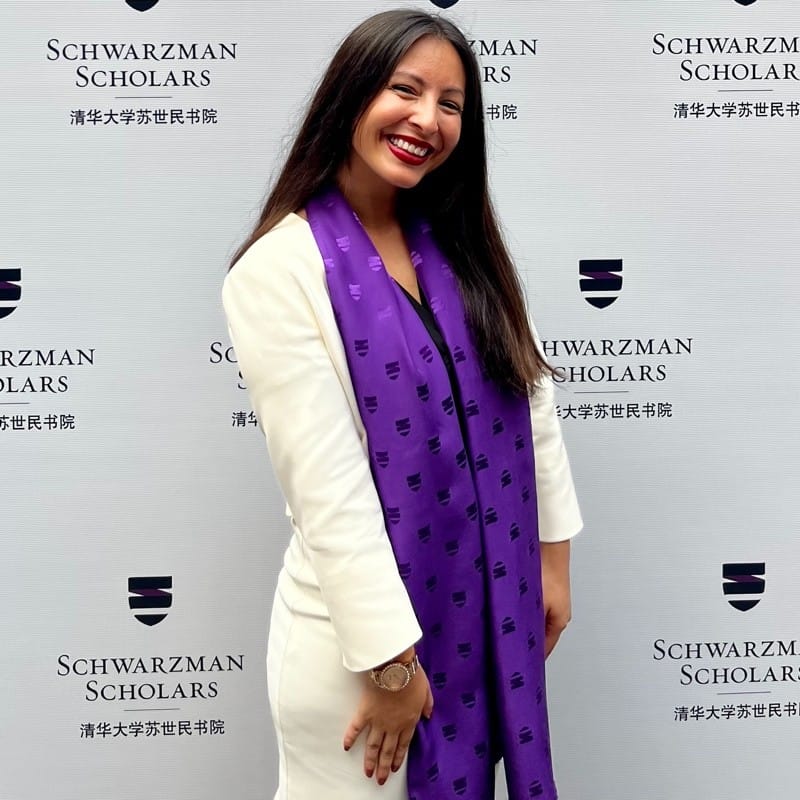
I have been getting a lot of questions about the Schwarzman Scholars program. I thought it would be useful to do a three-part blog series on it. In the first post, I discussed the application process. In this second post, I share my experience in the program and living in China. As an advocate for equitable access, I believe it is important for me to highlight this exceptional opportunity on My Access Abroad for anyone who might not be in spaces where these types of programs are shared.
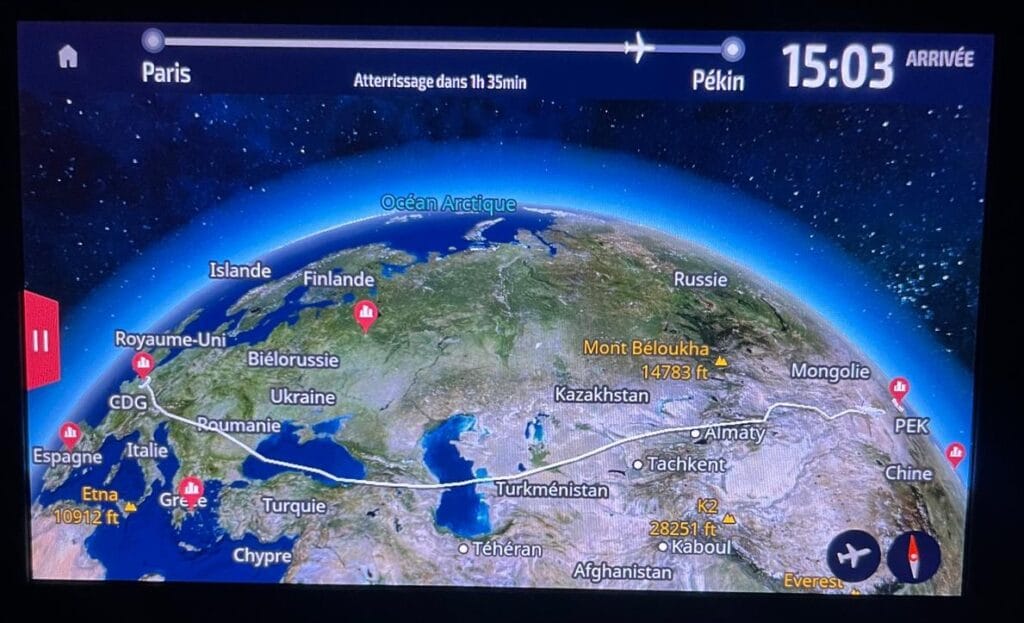
In August 2024, I landed in Beijing, China after the longest route of my life. After leaving our life behind in Paris I was living on the beautiful French Caribbean island of Martinique with my partner and his family. From Martinique, I took an 8.5 hour flight to Paris where I had an 11 hour layover. Then, a 10.5 hour flight to Beijing. The whole trip was about 30 hours. Tired does not even begin to explain how I was feeling once I arrived.
Arriving was a bit of a blur from getting off the plane, customs, and grabbing my suitcases. Small world moment: I did an internship in Geneva in 2022 and made a Chinese friend while there. She left Europe and moved to Beijing. When I told her that I was going to China, she was so excited and offered to meet me at the airport. When I exited customs and got my suitcases, I spotted her holding a cute sign with my name on it!
I also ran into a few scholars who were on the same flight. One was fluent in Chinese, so between my Chinese friend and him, they were able to negotiate reasonable taxi prices for everyone.
The taxi ride to the university campus was not long in distance, but I think my excitement to arrive made it feel longer. I kept looking out the window as if to will myself to wake up from a strange dream I was having of being in China… but no. It was real. My friend was sharing all she had been up to since being back in China. I kept thinking about how crazy it was to be sitting in a cab with a friend I made in Geneva.
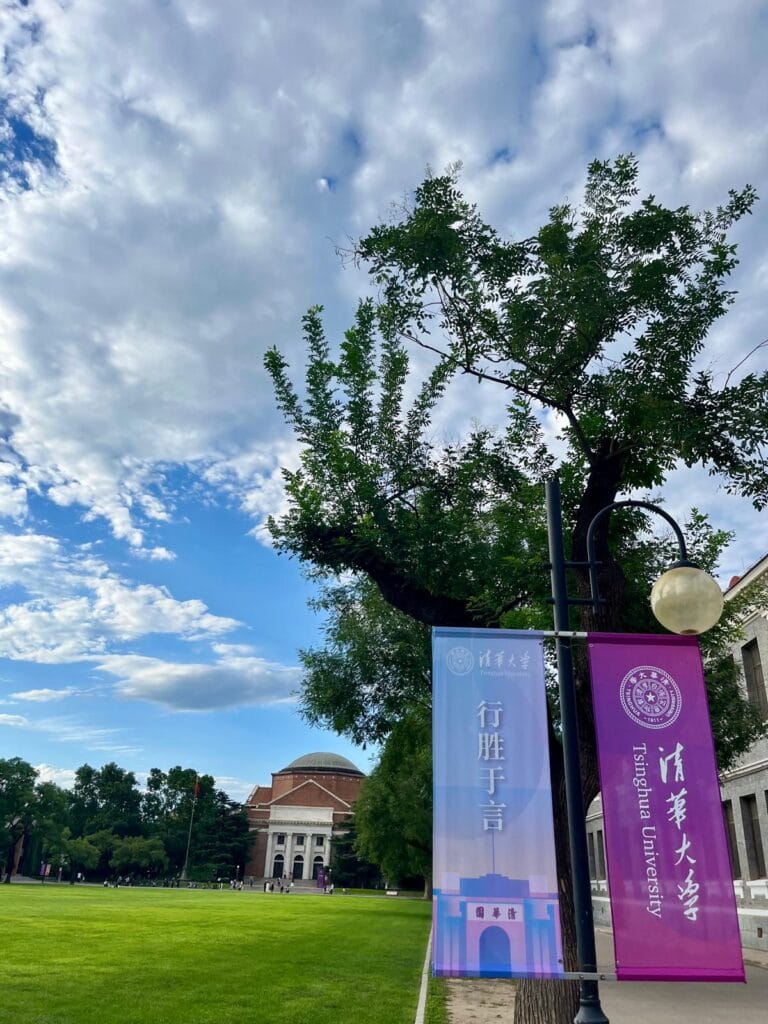
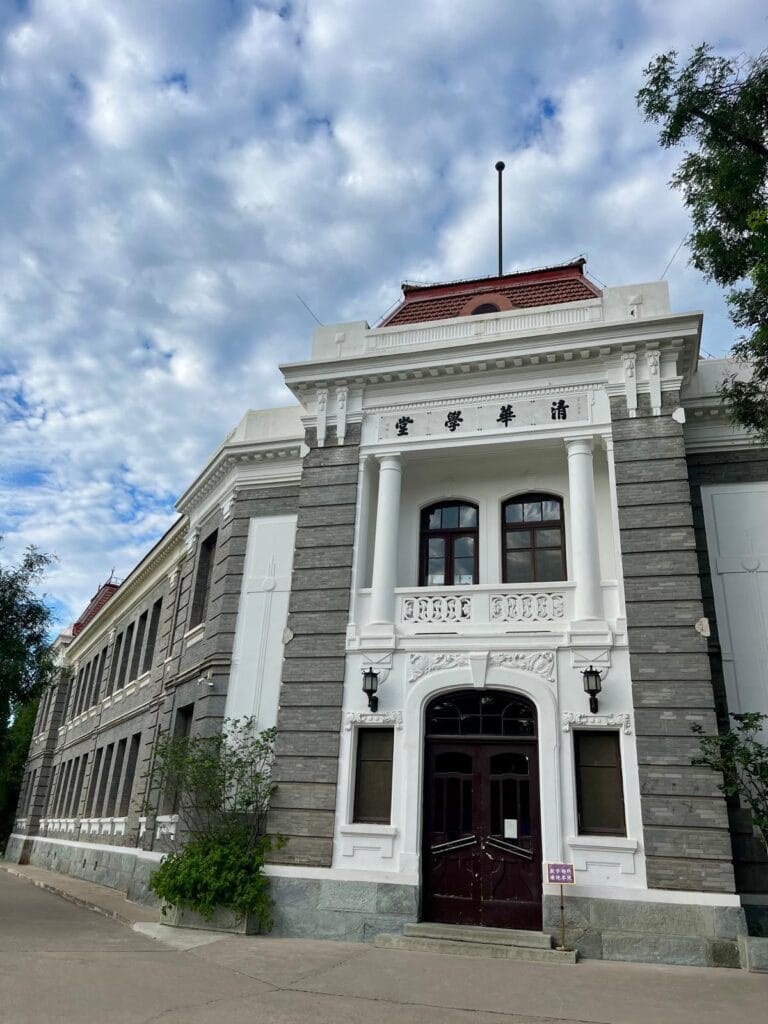
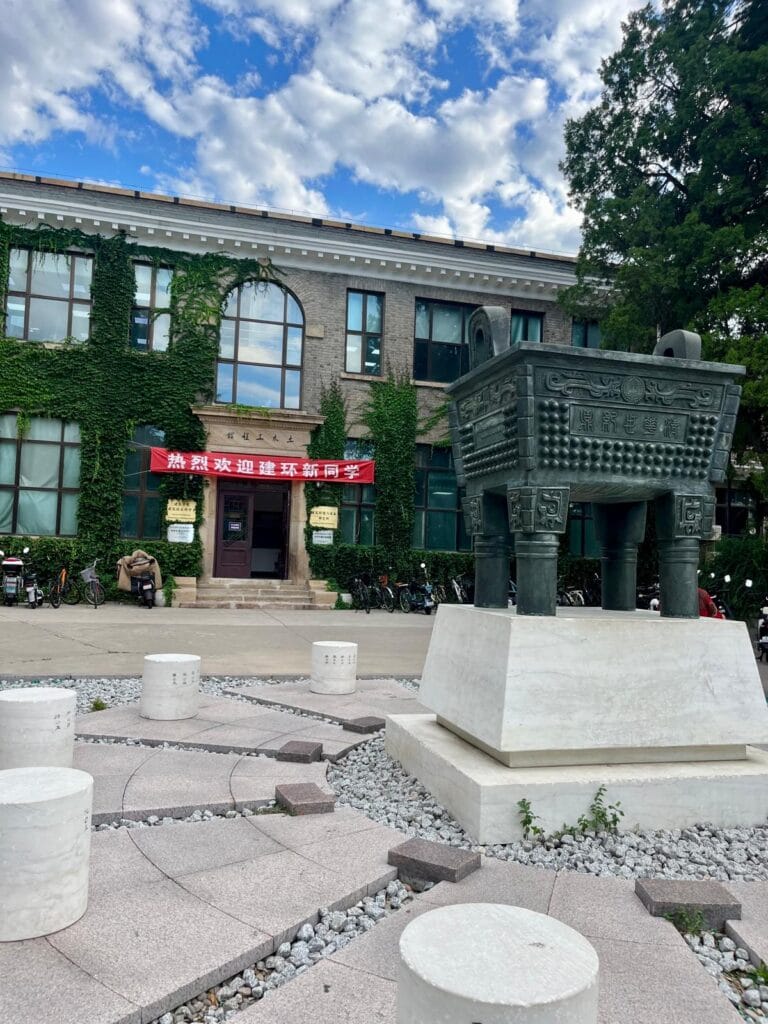
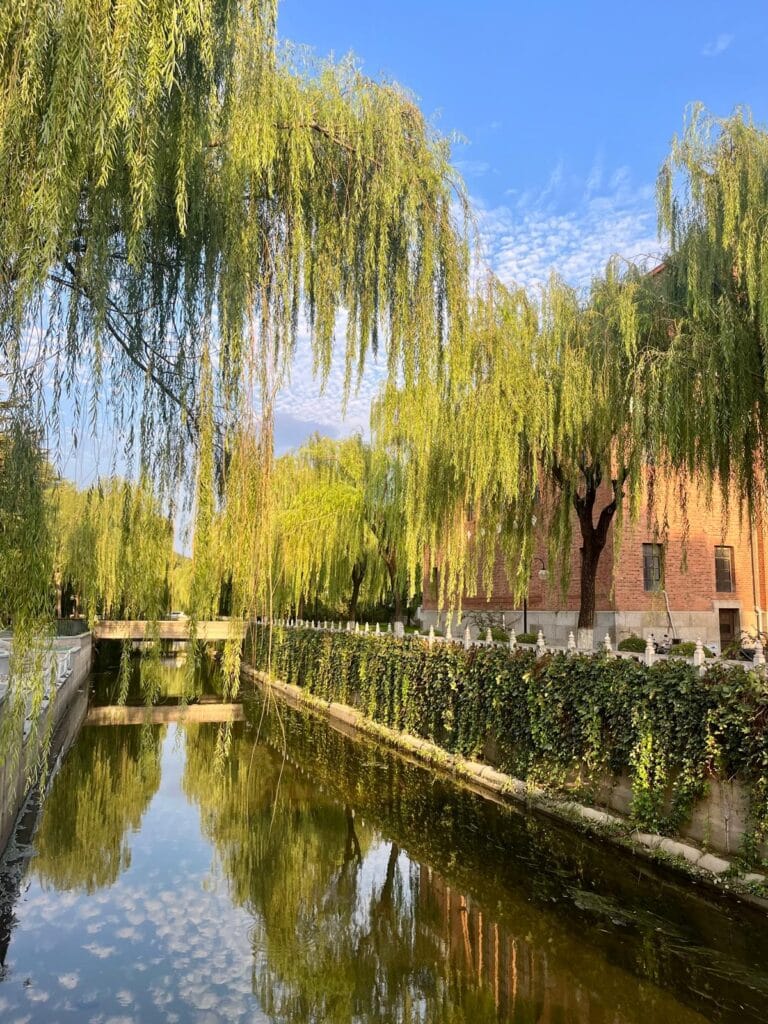
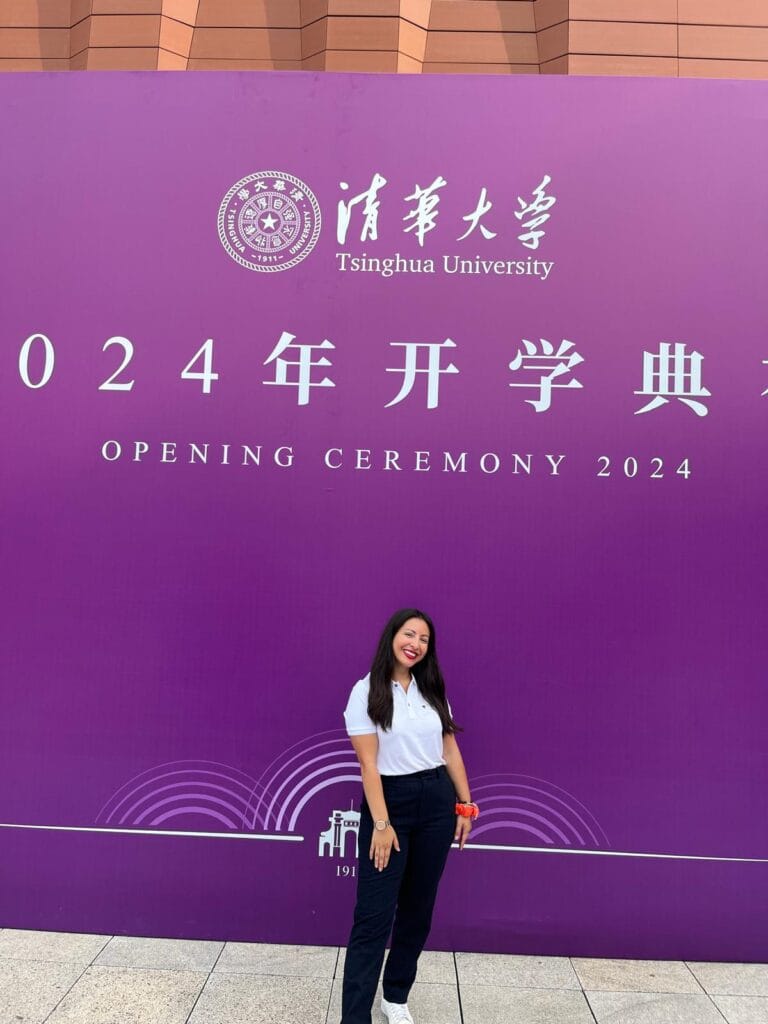
When we arrived at the university gate, they did not allow my friend to go inside with me. I had warned her that it was a possibility. She was just happy to be able to welcome me to China and help me get to where I needed to go. She took another cab home and I stayed in the cab to enter the Tsinghua University campus. It was less of a university and more of a small city. As soon as you crossed the gate, you entered a campus that was at the same time both calming with its nature and greenery, while also busy with people on their bicycles and scooters. The campus was a blend of ultra modern and traditional. The juxtapositions were incredible.
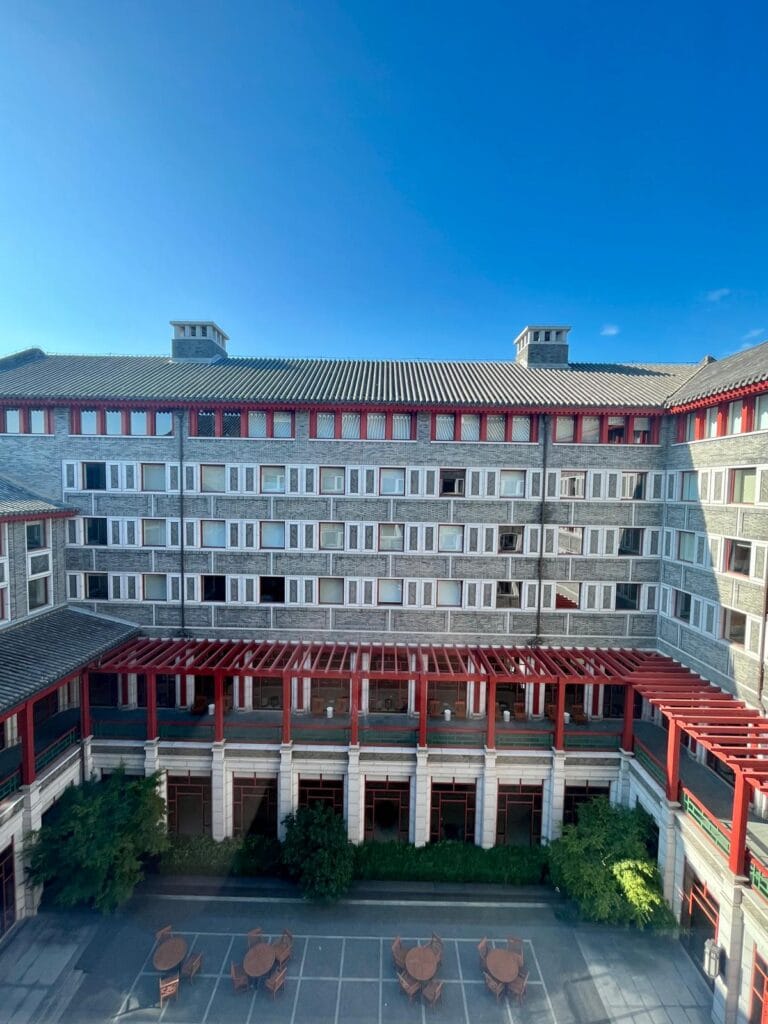
The building where I would be staying was Schwarzman College. It was a lot bigger in person than I thought it would be. Stepping inside for the first time was overwhelming. I had no time to rest. My suitcases stayed put and I went from one place to another doing administrative paperwork. This went on for days. It took a whole week to finish all of these processes – that I was lucky enough to have help for (my partner had to do them on his own) – and a whole other week before I was finally over the jet lag. The college staff made the process of settling into China as seamless as possible – getting a medical exam, opening a bank account, getting a Chinese phone number/SIM card, and installing all the necessary apps.
Once I was finally settled, it really hit me… “I am in China,” I kept thinking to myself.
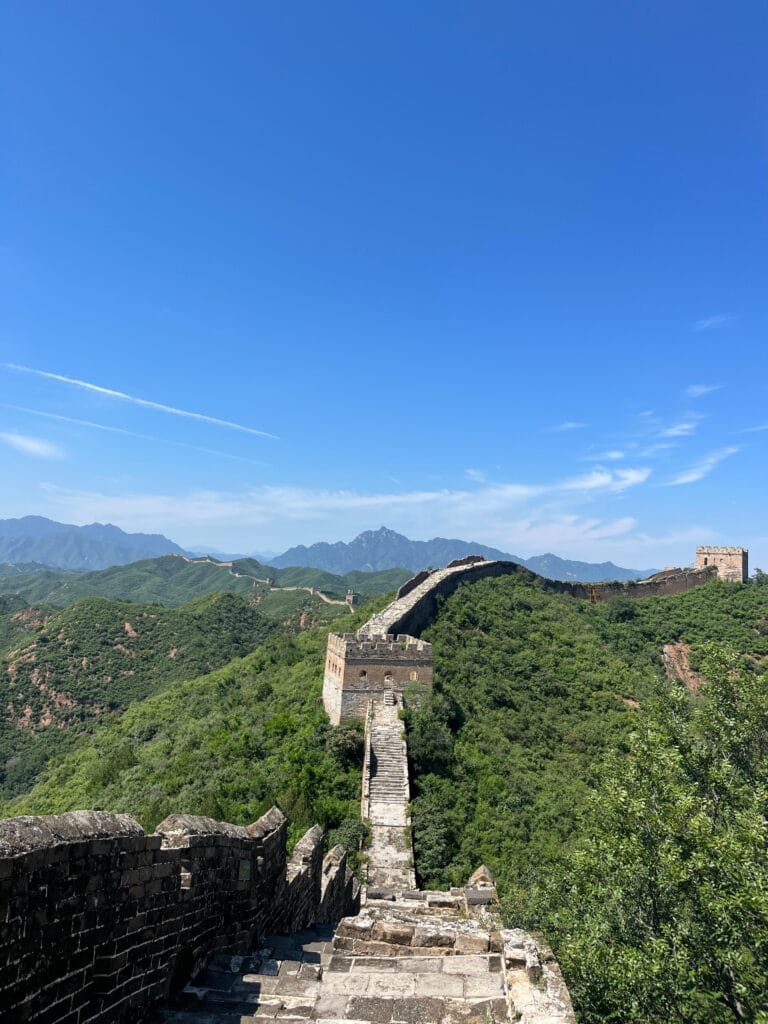
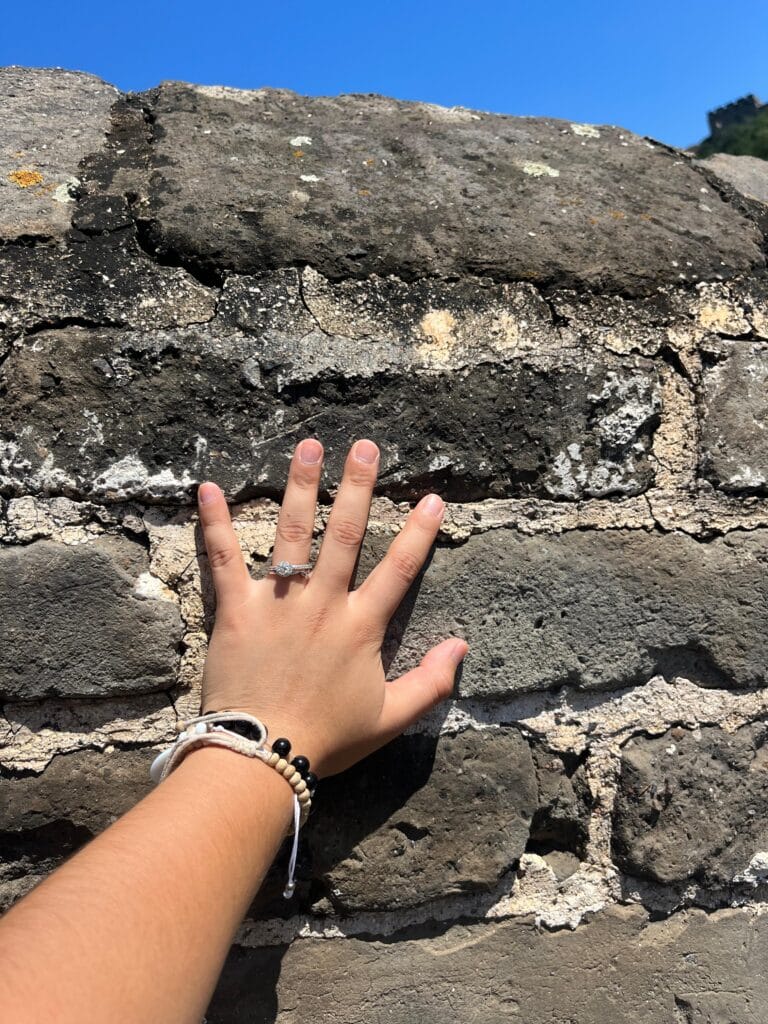
The #1 highlight of my first few weeks there was going to the Great Wall with the entire cohort. It has been a dream of mine for as long as I can remember. I read about it in a book when I was a little kid. At the time, I thought it was a crazy fantasy to ever go in person. But being there, touching it, and seeing out into the distance was an indescribable feeling. I even had to take a moment to myself. I got emotional thinking about how I was standing somewhere I never thought I would be.
Then, it was time for the real work to begin. Classes started. The Schwarzman Scholars program brings incredible professors from all over the world to teach us, of course, but also to eat and live with us for a module (eight weeks). In addition to that, we are able to attend events with leaders across all industries – politics, arts, business, nonprofits, etc. The conversations with scholars, guest speakers, and professors were incredibly insightful. I was constantly out of my comfort zone. I learned so much in the span of 10 months.
The program flew by honestly and I cannot believe it’s over. Being a Schwarzman Scholar is an experience that I will never forget. It greatly impacted how I see the world and my place in it. Besides visiting the great wall, another memorable experience was traveling to the Yunnan province for a “Deep Dive” trip.
There, we explored China’s rural revitalization efforts through its famous tea and budding coffee industries. One of the first places we visited was Beautiful Star Village, a newly developed community featuring a B&B, an entrepreneurship hub, a restaurant, and even a Starbucks! Seeing how corporate social responsibility (CSR) initiatives can create economic opportunities for rural communities was inspiring. This trip reinforced both the progress and complexity of rural revitalization. Seeing these dynamics firsthand deepened my understanding of China’s development strategies and their broader implications.
Growing up, I constantly navigated between my Mexican roots and my American upbringing, which made me naturally curious about bridging cultures. In school, I studied North America, Europe, the Middle East, and Africa but had little exposure to Asia. I have been working hard to learn languages, explore different cultures, and discover new parts of the world. Asia was a big question mark.
After this year, I want to continue engaging with China. As a Mexican, I believe Mexico has a lot to learn and vice-versa. As a leader in the Global South, China has the resources to drive development initiatives that uplift underserved communities like the one my family is from in rural Mexico. I wanted to understand how China approaches these issues and how I could contribute to my own country someday. This time in China helped me understand these issues on a deeper level.
Hands down though, the best part of this entire experience were the friendships. I built relationships with people who will be lifelong friends. They taught me a lot about myself and life in general. This past February, I had an unexpected surgery in rural China. It was super scary. Upon returning to the college, a group of close friends secretly organized an event to create a welcome back poster and handwritten letters. It was a touching moment that reminded me why this place was so special. We are part of a close-knit community. People here are more than just your classmates.
This program provides you with a truly unique experience. It brings together people from around the world who want to engage with China and, in doing so, drive meaningful change. As I reflect on my time there, I feel deeply grateful for this opportunity. Coming from an undocumented migrant background, I have always wanted to have a career that prioritizes social impact. My time at Schwarzman College only reinforced this goal.
So much happened this past year, so it is impossible to talk about it all, but there are a few more highlights:
Travels in Asia including 17 cities and 10 provinces in China, 3 cities in Thailand, 3 cities in Vietnam, and 1 city in South Korea
54th St. Gallen Symposium in Switzerland as a “Leader of Tomorrow” through a global essay competition where I wrote about Mexico’s role in making LATAM a new hub of power
Havingliteral former ambassadors and ministers from different countries as professors turned mentors
Some tips for when in China:
Must have phone apps
Banking – Bank of China (or whichever Chinese bank you open an account with – make sure to change the language to English)
Food delivery – Meituan, Ele.me
Language – HelloChinese (similar to Duolingo), Microsoft Translator, Pleco
Navigation – Amap, Apple Maps, Baidu Map
Social media – Xiaohongshu (Little Red Book/Red Book)
Shopping – JD, Taobao
Superapps – Alipay, WeChat
Taxi/ride sharing – Didi
Travel – Trip
Phrases that will go a long way
Duìbùqǐ, wǒ tīng bù dǒng. (Sorry I do not understand).
Xièxiè (Thank you).
Méi wèntí (No problem).
Wǒ yào zhège (I want this).
Zhè shì duōshǎo qián? (How much is this?)
Note: This post reflects the author’s own views. It was not endorsed by the Schwarzman Scholars program. Stay tuned for part three on life after the program.
About Itziri Gonzalez Barcenas
Itziri is a policy analyst, human rights advocate, and public speaker working at the intersection of migration and inclusive development. She is writing a book on migration, borders, and family separations. She previously worked with UN agencies, the OECD, and the CNRS on global projects spanning climate, migration, and development. A former DACA recipient, she studied Global Affairs at Tsinghua University as a Schwarzman Scholar and CONACYT Fellow, Human Rights at Sciences Po Paris, and Political Science/Africana Studies at Davidson College.
I have been getting a lot of questions recently about my application experience. I thought it would be useful to do a three-part series on this. In this first post, I discuss:
· What led me to apply;
· The overall process;
· Some application tips.
In the second post, I share my experience in the program and living in China. As an advocate for equitable access, I believe it is important for me to highlight this exceptional opportunity on My Access Abroad for anyone who might not be in spaces where these types of programs are shared.
Deadline: September 12, 2024 at 3:00 PM (EDT) – This is around the same time every year.
A few months ago, I found out that I was one of 150 – out of more than 4200 applicants – accepted into the 9th cohort of Schwarzman Scholars. To say I was in utter shock and disbelief is an understatement. I was undocumented in the U.S. so post-secondary education seemed to be out of the cards for me. However, thanks to receiving Deferred Action for Childhood Arrivals (DACA) in 2013 and the Golden Door Scholarship, a dream as far-fetched as going to college came true. This is where it all began. Since then, I have been seeking ways to continue learning about ways to give back and help make things better for the next generation.
Itziri Gonzalez Barcenas, Co-Founder of My Access Abroad and Schwarzman Scholar
The Schwarzman Scholarship was founded by Stephen A. Schwarzman, an American financier, philanthropist, and Chairman, CEO and Co-Founder of Blackstone. It is a one-year fully-funded master’s degree program at Tsinghua University in Beijing, China. The aim of the program is to “identify the most promising young leaders from around the world… [to] study in China to create a more peaceful and prosperous future for all.”
Decision to apply
I have not always been interested in China. The seed was planted in the fall of 2017 by a professor I had during my domestic exchange semester at Howard University. As an Africa-China relations expert, Dr. Phiwokuhle Mnyandu constantly weaved stories about his time in China into his lectures. I marveled at his detailed anecdotes. His insights provided a refreshing new perspective that I had never heard before. Dr. Mnyandu left a big impression on me, so I kept in touch. We even interviewed him in 2021 (check it out here).
I was the first in my family to graduate from high school and was a low-income, first-generation college student, so I was not aware of these types of opportunities growing up. To make up for this lack of exposure, I used LinkedIn and newsletters to stay as informed as possible about interesting opportunities. When someone from Davidson College, my undergraduate institution, received the Schwarzman Scholarship, they posted about it everywhere. I researched it further and thought it looked like a great opportunity, but not for someone like me. I was too scared at the possibility of leaving the U.S. at that point.
So, my eventual decision to apply was not immediate. After graduation, I served as a College and Career Advisor at a Title 1 public high school in rural North Carolina through AmeriCorps. Then, after some intense soul searching, decided it was time to leave the U.S. and applied to do a two-year Master’s degree at Sciences Po Paris School of International Affairs (PSIA) and was accepted. I saw another student from my undergraduate institution receive the Schwarzman Scholarship. It reminded me of the program, but, once again, the timing was off. I was getting ready to leave the U.S. to go to Mexico and do my French visa process.
Following a ten-month delay, everything eventually worked out with my visa. During this unexpected “gap year,” I reconnected with my roots, my family, and healed from the pain of leaving everything and everyone behind. I entered France and began my two-year Master’s degree program in Paris. I settled into my studies, met incredible people from all over the world, and did internships to gain professional experience.
During my final year, I decided to get an early start on finding a post-graduate opportunity. Initially, I cast a narrow net only looking at full-time roles at international organizations. Then, as the months passed, I noticed a pattern of three main outcomes: 1.) rejection email; 2.) getting ghosted; 3.) position being canceled. This happened over and over… and over again. Eventually, I felt obliged to widen my search. I started looking at fellowships and other academic programs.
Then, I saw it… the Schwarzman Scholars application was opening in April 2023. I looked it up again to refresh my memory of the program and see if I was still eligible to apply. I fulfilled all the eligibility requirements and it was actually the last year I could apply! This time, the timing felt right. I took a leap of faith and signed up for an informational webinar.
Structuring my application
After the webinar, I felt informed and determined. I started my application as soon as the portal allowed me to enter. I watched Schwarzman Scholars’ YouTube videos religiously and read former Scholars’ advice to learn how to best approach the application. This video from a Schwarzman alum was particularly helpful in structuring my application in chunks.
Below are some additional tips for structuring your time:
Be organized and intentional. Break it down according to your own school/work/social calendar.
Be realistic. You know yourself best. For example, if you are not able to work for longer than 45-minute chunks, do not pressure yourself to do so.
Be accountable. Time flies by… if you schedule time to work on your application, stick to it.
The application process
The next step was thinking about who I would reach out to for constructive feedback on my essays and who would be my three recommenders. For my “readers,” I ended up asking a high school teacher I am very close with to this day, one of my closest friends from my undergraduate studies, and my partner, Brice. I felt it was important to choose people from different periods of my life who truly know me and whom I trust.
As for my recommenders, the first was a professor from my undergraduate studies who has known me for years. She knows my character and that is super important for this type of application. We are still in touch and I consider her a mentor. She is someone who can speak to my passion and character. For my second recommender, I chose Dr. Mnyandu because of his expertise and how he would be able to speak to my curiosity about China dating back years. He has also been extremely supportive of me throughout the years. The third recommender I chose is someone from my latest graduate studies. He is someone I worked with closely due to my involvement with the PSIA Student Association. I believed he would be able to speak to my capabilities as a leader and bridging students with the institution. He also heard many (too many) of my ideas on issues ranging from the course selection process, diversity of professors, mentorship for first-generation students, and more. I felt he could also speak to the “behind the scenes” work I do.
Here are some tips to consider when selecting your three recommenders:
Think beyond a title… their position is not the most important.
Who knows you – your passions, biggest dreams, and your character well?
Who is/has been your biggest cheerleader(s) academically/professionally?
Who can best highlight your work ethic, personality, etc.?
The whole application process was extremely introspective. I took the time to really think about who I am, what I wanted to do with my life, and why. I also thought about how being in this program in China could help me get there. Why not another country? As I wrote and rewrote my essays, the picture started to become clear. The feedback I received from my three readers really helped shape my narrative.
Leadership and Personal Statement Essays
For my leadership essay, I started with a short account of where my vision of leadership comes from. From there, I moved into my trajectory navigating access to education as an undocumented migrant in the U.S. Finally, I spoke about a leadership experience that I believe really speaks to who I am as a leader – co-organizing a national immigration conference at my college campus in the American South. Focusing on this specific experience allowed me to show multiple facets of my leadership style: intentional, purpose-driven, and collaborative.
In my personal statement, I wanted to dive a little more into my background and story. I started by discussing the tough decision to self-deport from the U.S. in 2020. Then, I discuss the way being in my home country, Mexico, for the first time in almost twenty years radically changed me. Finally, I finish my essay by clearly stating how all of these experiences led to my life aspirations and why I believe going to China would help me.
Below are some tips for your leadership and personal statement essays:
Think about what you believe leadership means to you.
What makes you an impactful leader?
Are there experiences that speak to your character and vision as a leader?
What drives you? What gets you out of bed in the morning? What keeps you up at night?
When you think about the way the world is today, how and what would you change?
Other tips to consider
The final part of the application I want to highlight is the one-minute introduction video. I recommend doing it – even if it is optional. It may seem a bit daunting at first. I totally get that feeling. Think about what part of your interests are not seen much in the application. Have fun with it! For example, I used mine to talk about my love for food and the small restaurant Brice and I opened in Mexico during our unexpected “gap year” there.
Once you feel like your application is solid, I recommend reaching out to the fellowship office at your college/university. It is their job to know about these types of opportunities. They are aware of the process and the general DO’s and DON’Ts. They give great feedback to improve your overall application. I highly advise you to go over the FAQs – Interview Process again to make sure you did not miss anything.
Spending all those months preparing my application was crucial for me to put my best foot forward. I did not rush the process. Then, I waited and waited… and waited. I found out I was selected for an interview in October 2023. Relief!! The second part was the preparation for the panel interview. For this, I suggest working with the fellowship office to put together at least one mock panel with feedback. I printed my application and read it meticulously to ensure I knew it like the back of my hand. I made very detailed annotations and wrote solid evidence-based arguments for why I believed certain things. I also thought about additional leadership examples that I did not include in my application. I focused on my body language and tone to avoid sounding unnatural or rehearsed.
At the end of the day, they want to get to know who YOU are. Make sure that is always at the back of your mind and I am sure you will do great. Good luck!
Note: This post reflects the author’s own views. It was not endorsed by the Schwarzman Scholars program. Stay tuned for part two on arriving in Beijing, China.
About Itziri Gonzalez Barcenas
Itziri is a policy analyst, human rights advocate, and public speaker working at the intersection of migration and inclusive development. She is writing a book on migration, borders, and family separations. She previously worked with UN agencies, the OECD, and the CNRS on global projects spanning climate, migration, and development. A former DACA recipient, she studied Global Affairs at Tsinghua University as a Schwarzman Scholar and CONACYT Fellow, Human Rights at Sciences Po Paris, and Political Science/Africana Studies at Davidson College.